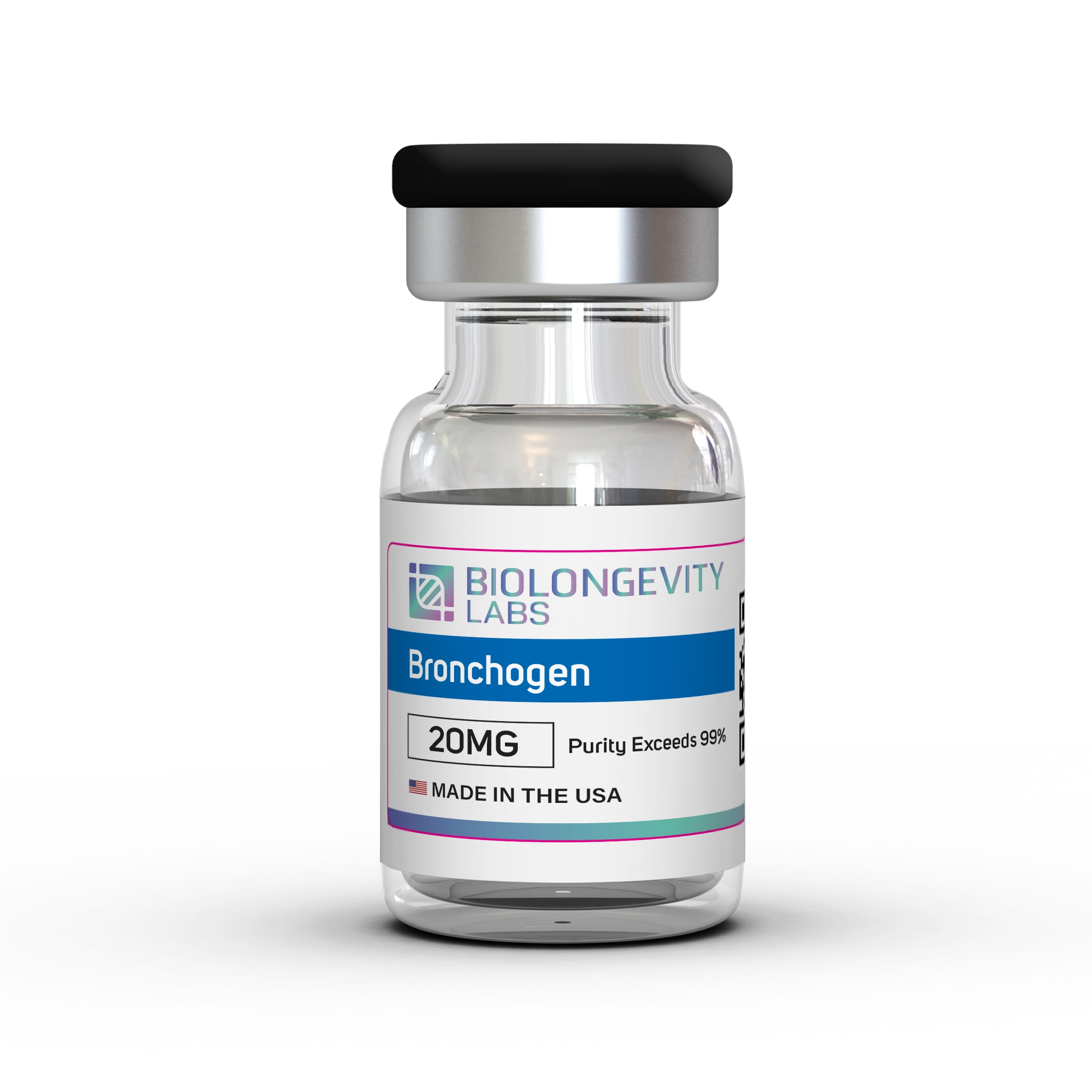
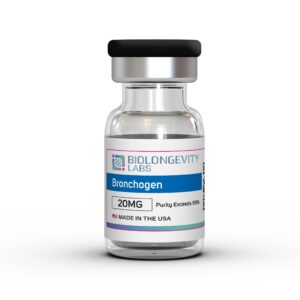
Bronchogen Product Description
Bronchogen is a DNA-stabilizing tetrapeptide composed of four amino acids (Ala-Glu-Asp-Leu) that acts as a bioregulator specifically targeting lung tissue. The peptide’s primary effects include reducing inflammation in lung tissue, improving epithelial cell function, and increasing surfactant production.
Peptide Information
| Property |
Value |
| Peptide Sequence |
Ala-Glu-Asp-Leu |
| Molecular Formula |
C18H30N4O9 |
| Molecular Weight |
446.45 g/mol |
| Synonyms |
Peptide AEDL |
Bronchogen Research
Bronchogen is a tetrapeptide composed of four amino acids (Ala-Glu-Asp-Leu) that has been studied for its potential bioregulatory effects, particularly in lung tissue. This DNA-stabilizing peptide has shown promise in stimulating cell renewal processes and enhancing the functional activity of bronchial epithelial cells. Research suggests that Bronchogen may interact with specific DNA sequences, particularly those containing CTG motifs, potentially influencing gene expression and epigenetic regulation.
The peptide’s mechanisms of action are thought to involve modulating signal transduction pathways and transcription factors at the DNA level. Research areas for Bronchogen include its application in treating lung conditions, its role as a plant growth factor, and its potential as an anti-aging geroprotective agent.
Bronchogen and DNA Stabilization
Bronchogen has been demonstrated to stabilize DNA by increasing the melting temperature of DNA from calf thymus and mouse liver by 3.1°C within a specific molar ratio range (0.01-0.055). This suggests that bronchogen acts as a DNA-stabilizing agent, although further increases in concentration do not enhance this effect. The peptide does not show specificity for adenine-thymine or guanine-cytosine base pairs, indicating a strong but non-specific binding to DNA, primarily interacting with nitrogen bases on both strands.1
Bronchogen, along with other short peptides, can penetrate animal cells and interact with nuclear components, including DNA. It shows preferential binding to deoxyribooligonucleotides containing CTG sequences, which are significant for cytosine DNA methylation in eukaryotes. The peptide’s ability to bind specific DNA sequences suggests a potential role in epigenetic regulation, possibly influencing gene activity and cellular functions from early developmental stages.2
Bronchogen and Lung Protection
Bronchogen, also known as ADEL, has been shown to regulate the expression of genes involved in bronchial epithelium differentiation and maintenance. It influences the expression of genes such as NKX2-1, SCGB1A1, and FOXA1, which are crucial for bronchial epithelial cell function. The peptide affects the levels of proteins like Ki67 and Mcl-1, which are associated with cell proliferation and survival, indicating its role in promoting bronchial epithelial cell proliferation and potentially protecting against pulmonary pathologies. Additionally, it may have a geroprotective effect, potentially contributing to the preservation of lung function with aging. 3
References
- Monaselidze, J., Khavinson, V., Gorgoshidze, M., Khachidze, D., Lomidze, E., Jokhadze, T., & Lezhava, T. (2011). Effect of the Peptide Bronchogen (Ala-Asp-Glu-Leu) on DNA Thermostability. Bulletin of Experimental Biology and Medicine, 150, 375-377. https://doi.org/10.1007/s10517-011-1146-x.
- Fedoreyeva, L., Kireev, I., Khavinson, V., & Vanyushin, B. (2011). Penetration of short fluorescence-labeled peptides into the nucleus in HeLa cells and in vitro specific interaction of the peptides with deoxyribooligonucleotides and DNA. Biochemistry (Moscow), 76, 1210-1219. https://doi.org/10.1134/S0006297911110022.
- Khavinson, V., Tendler, S., Vanyushin, B., Kasyanenko, N., Kvetnoy, I., Linkova, N., Ashapkin, V., Polyakova, V., Basharina, V., & Bernadotte, A. (2014). Peptide Regulation of Gene Expression and Protein Synthesis in Bronchial Epithelium. Lung, 192, 781-791. https://doi.org/10.1007/s00408-014-9620-7.
Certificate of Analysis (COA) for Every Batch
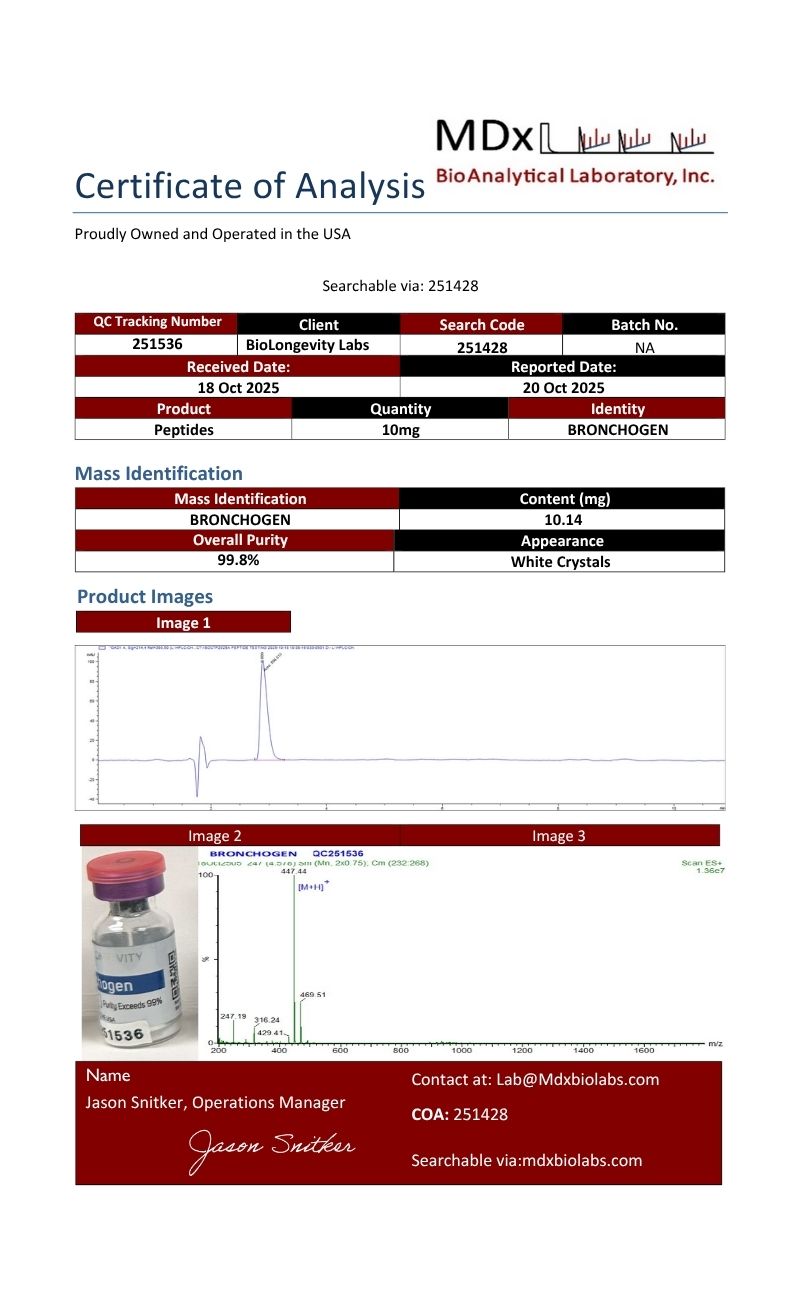
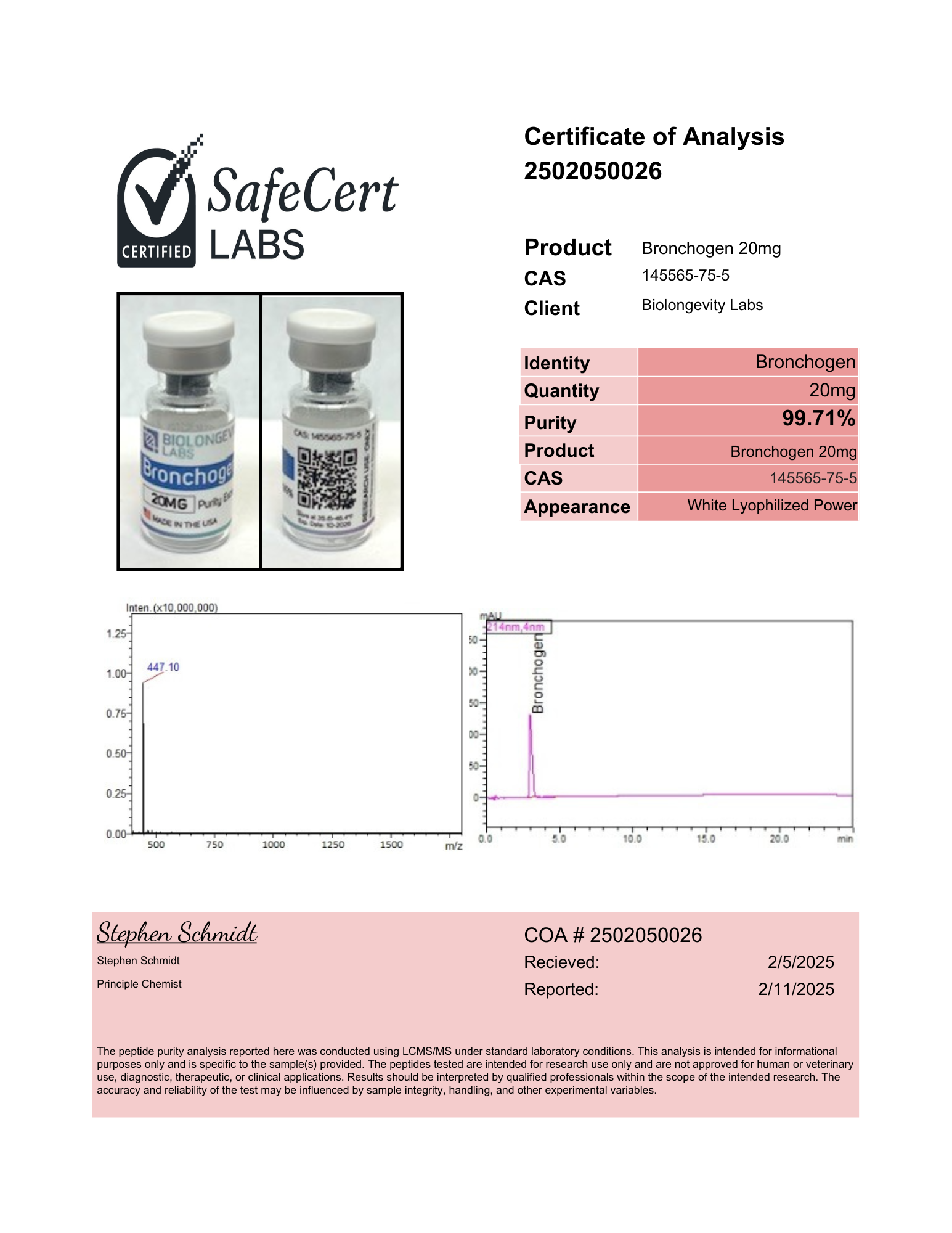
A Certificate of Analysis (COA) is a document that verifies a compound’s identity, purity, and batch quality through independent laboratory testing. Every compound from BioLongevity Labs ships with a COA tied to its specific batch, so researchers can confirm exactly what they received before it enters a protocol.
Each COA reports results from third-party laboratory analysis, including:
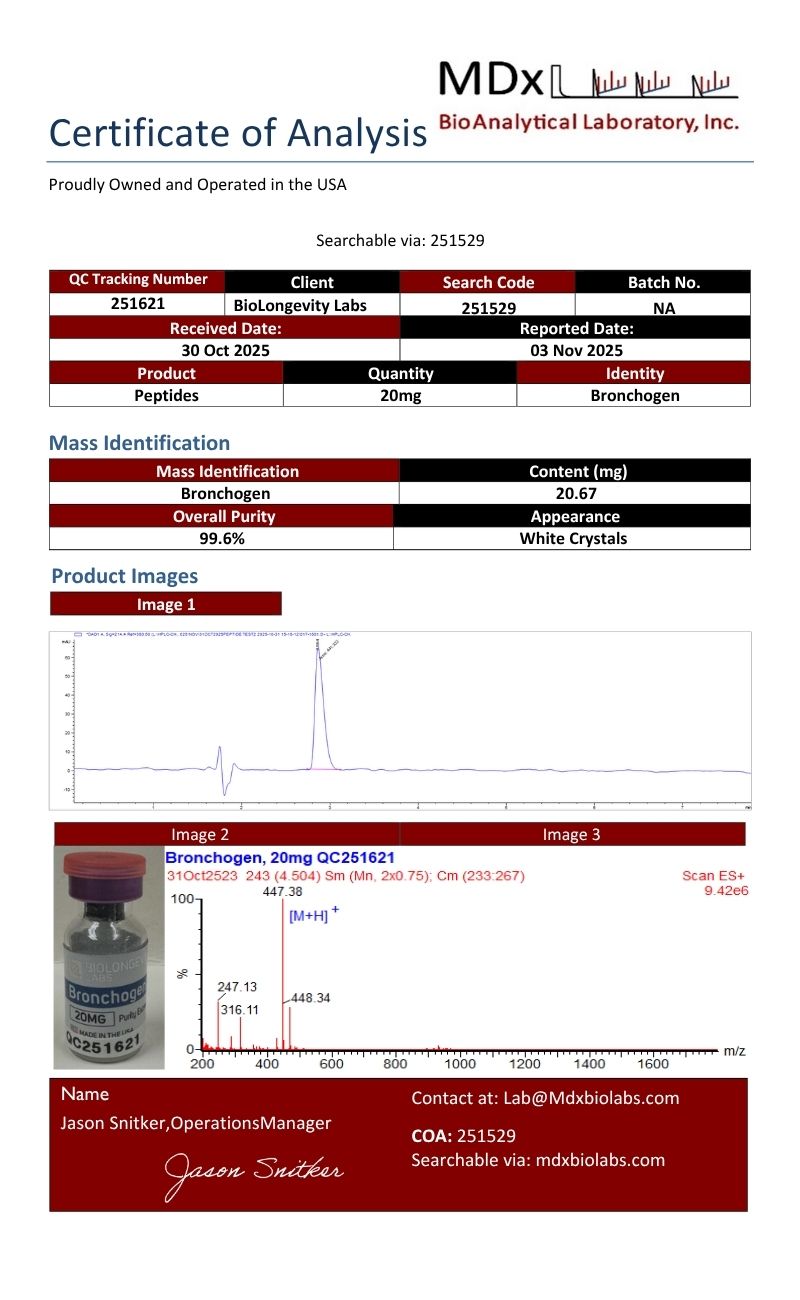
- Ultra-high-performance liquid chromatography with mass spectrometry (UHPLC-MS) for purity, typically confirmed at 99% or higher
- Mass identification for molecular confirmation and content quantitation
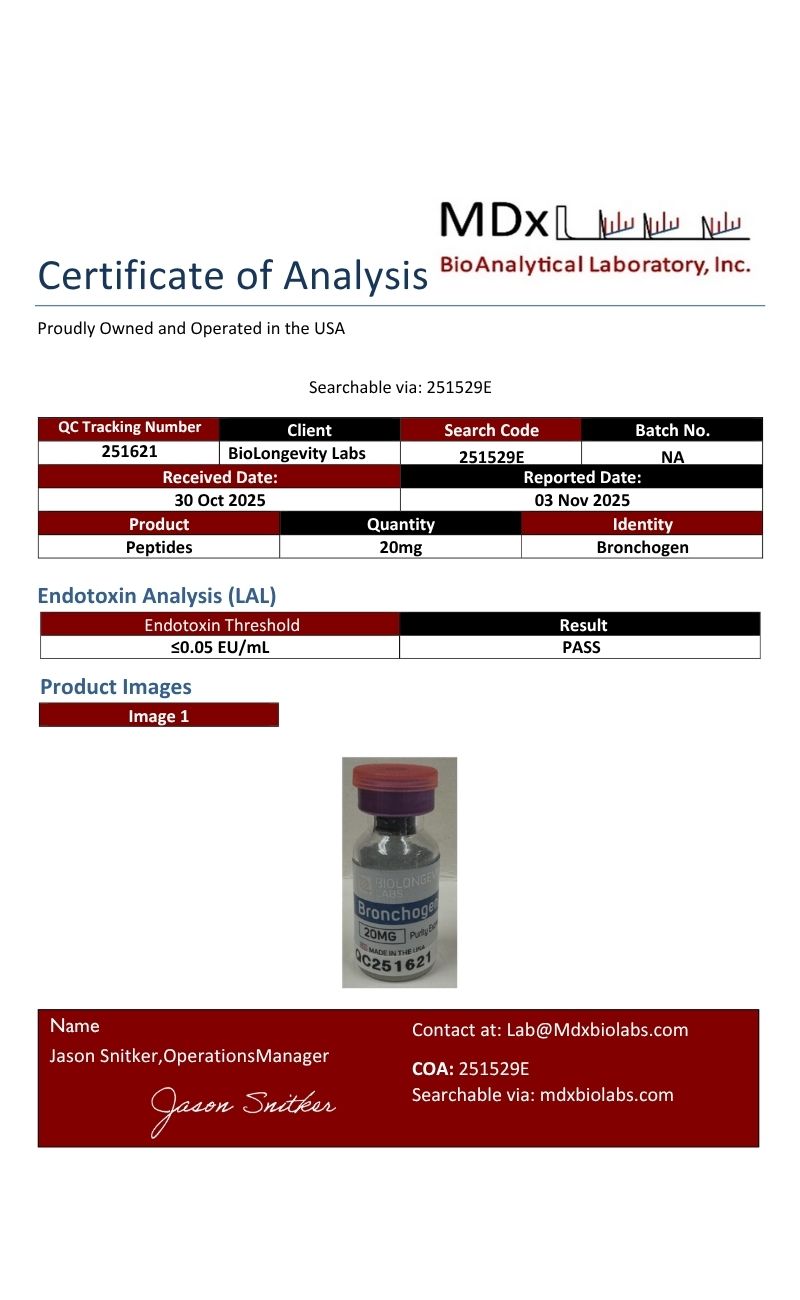
- Endotoxin quantitation by Limulus amebocyte lysate (LAL) assay where applicable
- Visual and physical characterization of the finished material
How to verify a COA independently
Every certificate can be checked against the issuing laboratory’s own records, not just the copy hosted here. Verification does not depend on BioLongevity Labs.
- MDx BioAnalytical Laboratory certificates carry a QC tracking number and a search code. Newer certificates also carry a QR code. Scan the code, or enter the search code at mdxbiolabs.com, to pull the official record.
- BioRegen reports of analysis carry a Report ID and a Validation Key. Scan the QR code on the certificate to open the official record, or reference both identifiers when contacting the laboratory at the address printed on the report.
- SafeCert Labs certificates, which appear on a number of earlier batches, carry a COA number and the signature of the reporting chemist. Reference that number when requesting confirmation from the laboratory directly.
Batches are frequently tested by both laboratories independently. When two certificates exist for the same lot, each one resolves at its own issuing laboratory, which lets a researcher confirm the same material twice through two unrelated sources.
COAs are sourced from independent certified labs rather than in-house testing alone, giving researchers a verifiable record of molecular integrity for each batch. All compounds are supplied for research use only.
Review the COAs for this batch below, or browse the full COA library.
Endotoxin Bronchogen
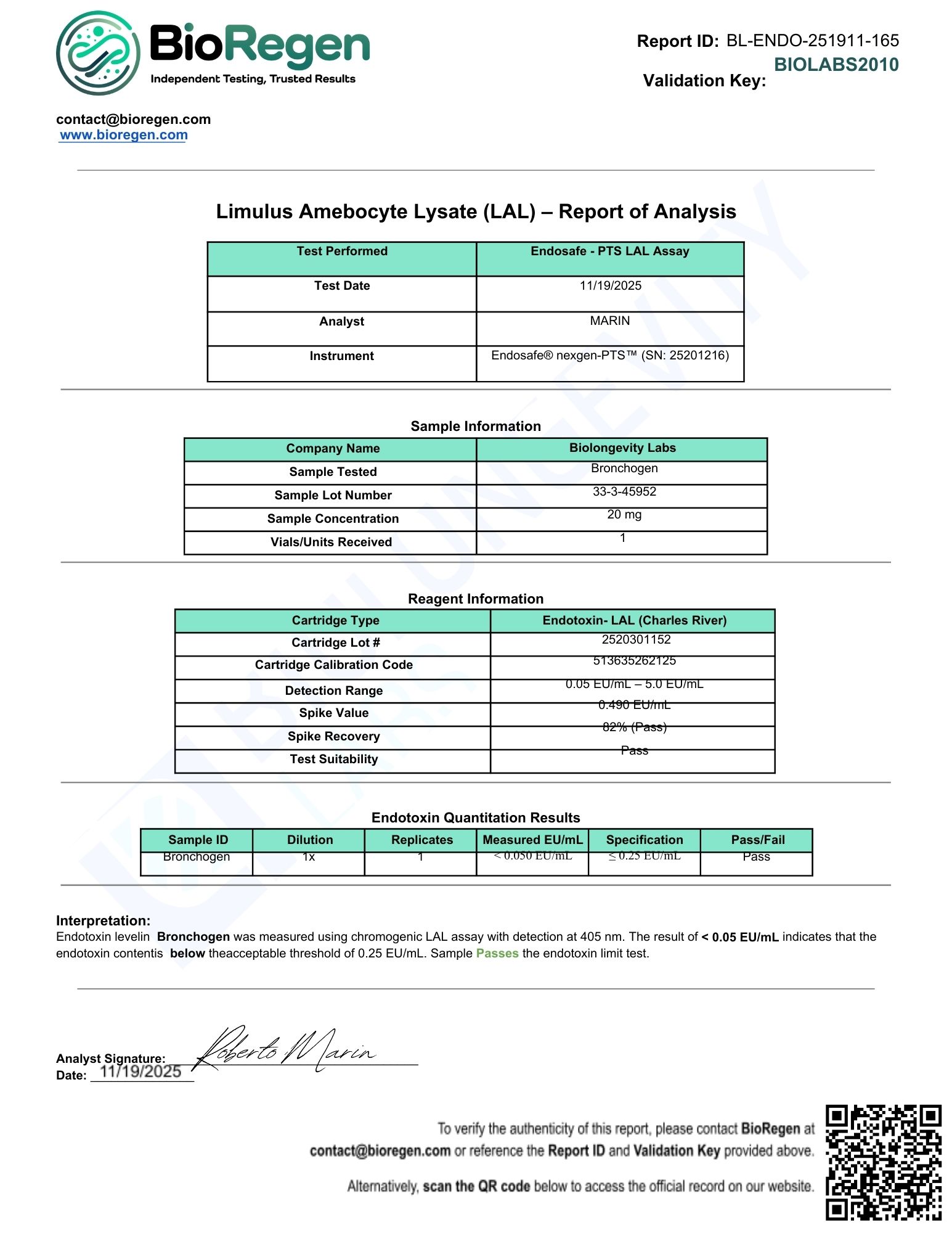
Bronchogen (251529)
Bronchogen (251529E)
BRONCHOGEN(251428)
Bronchogen(2502050026)
×
![]()