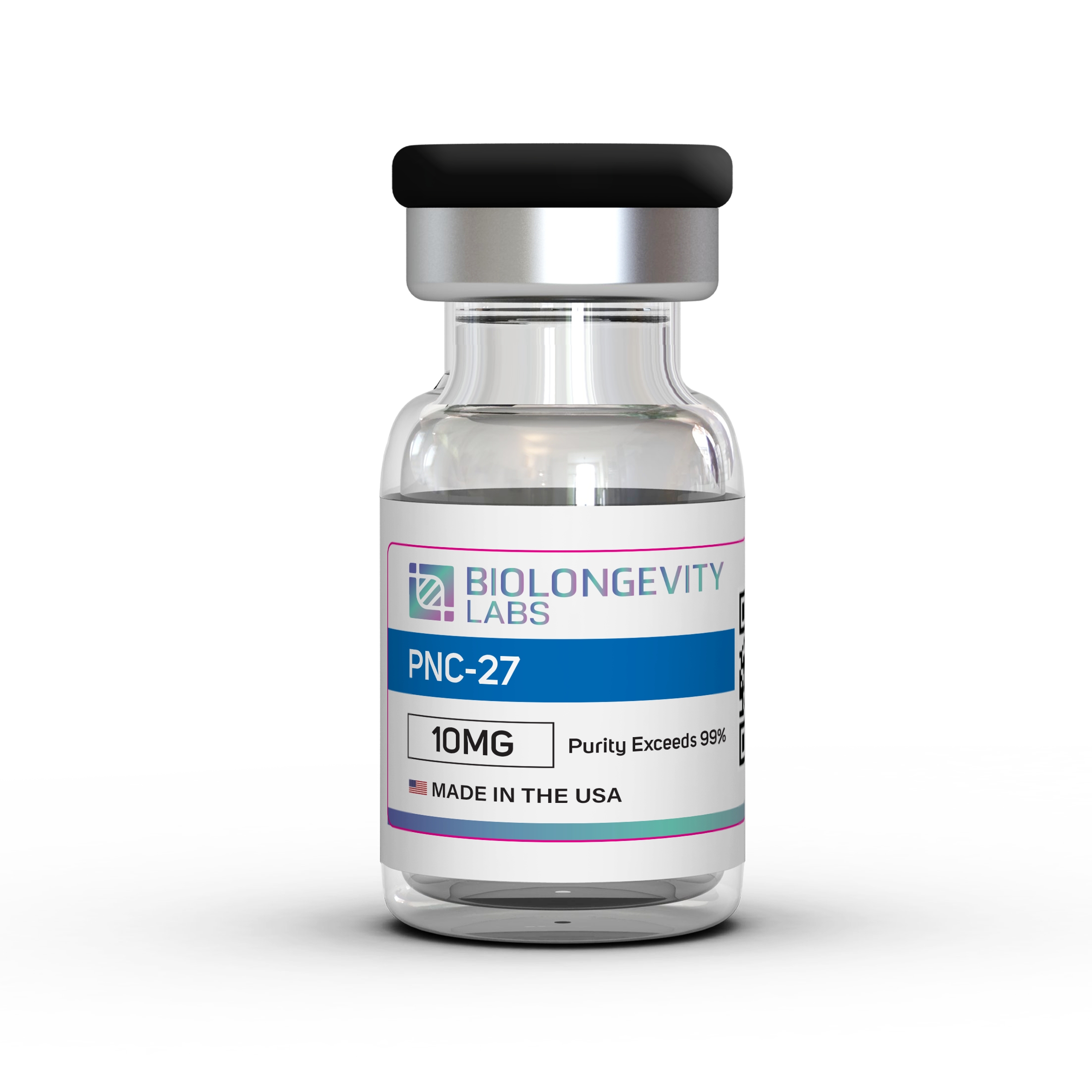
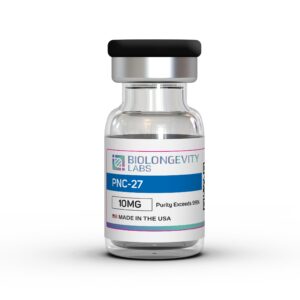
PNC-27 Product Description
PNC-27 is a synthetic peptide designed to selectively kill cancer cells by targeting a protein called HDM-2 (also known as MDM2) found on the membranes of many cancer cells. It works by binding to membrane-bound HDM-2, forming pores in the cancer cell membrane, and causing rapid cell death through necrosis, while sparing normal cells.
PNC-27 is derived from the p53 protein’s HDM-2 binding domain (amino acids 12-26) and is linked to a membrane-penetrating sequence, allowing it to enter and act on cancer cell membranes. The peptide binds specifically to HDM-2 present on the surface of cancer cells, not normal cells. This binding leads to the formation of transmembrane pores, disrupting the cell membrane and causing cell lysis and necrosis, independent of the p53 pathway.
Peptide Information
| Property |
Value |
| Peptide Sequence |
Pro-Pro-Leu-Ser-Gln-Glu-Thr-Phe-Ser-Asp-Leu-Trp-Lys-Leu-Leu-Lys-Lys-Trp-Lys-Met-Arg-Arg-Asn-Gln-Phe-Trp-Val-Lys-Val-Gln-Arg-Gly |
| Molecular Formula |
C188H293N53O44S |
| Molecular Weight |
4029.2 g/mol |
| CAS Number |
1159861-00-3 |
| Synonyms |
H-PPLSQETFSDLWKLLKKWKMRRNQFWVKVQRG-OH, PPLSQETFSDLWKLLKKWKMRRNQFWVKVQRG-acid, H-Pro-Pro-Leu-Ser-Gln-Glu-Thr-Phe-Ser-Asp-Leu-Trp-Lys-Leu-Leu-Lys-Lys-Trp-Lys-Met-Arg-Arg-Asn-Gln-Phe-Trp-Val-Lys-Val-Gln-Arg-Gly-OH, A6, Paralit |
PNC-27 Peptide Structure

Source: PubChem
Lyophilized Peptides:
These peptides are freeze-dried, a process that not only extends shelf life but also preserves the purity and integrity of the peptides during storage. We do not use any fillers in this process.
PNC-27 targets cancer cells because they express high levels of membrane-bound HDM-2, unlike normal cells, which have little or none. This selectivity results in minimal toxicity to normal cells, including hematopoietic stem cells and other non-cancerous tissues.[1]
Broad Anticancer Activity
PNC-27 has demonstrated cytotoxicity against a wide range of solid and hematopoietic tumors, including chemotherapy-resistant cancers and primary tumor cells from ovarian and uterine cancers. The anticancer peptide has also shown efficacy in animal models, eradicating metastatic pancreatic tumors and leukemia stem cells. [1][2][3]
Primary Tumor Studies
Ex vivo studies on freshly isolated primary human ovarian and uterine cancer cells confirmed that PNC-27 induces dose-dependent cell death, with no observed effect on normal cells.[2]
References
- Pincus, M., Silberstein, M., Zohar, N., Sarafraz‐Yazdi, E., & Bowne, W. (2024). Poptosis or Peptide-Induced Transmembrane Pore Formation: A Novel Way to Kill Cancer Cells without Affecting Normal Cells. Biomedicines, 12. https://doi.org/10.3390/biomedicines12061144.
- Sarafraz‐Yazdi, E., Salame, G., Gorelick, C., Wagreich, A., Angert, M., Abulafia, O., Pincus, M., & Michl, J. (2011). Abstract C44: Ex vivo cytotoxicity of PNC-27 on primary human ovarian and endometrial cancers. Cancer Research, 71. https://doi.org/10.1158/1538-7445.FBCR11-C44.
- Wang, H., Zhao, D., Nguyen, L., Wu, H., Li, L., Dong, D., Troadec, E., Zhu, Y., Hoang, D., Stein, A., Malki, M., Aldoss, I., Lin, A., Ghoda, L., McDonald, T., Pichiorri, F., Carlesso, N., Kuo, Y., Zhang, B., Jin, J., & Marcucci, G. (2019). Targeting cell membrane HDM2: A novel therapeutic approach for acute myeloid leukemia. Leukemia, 34, 75-86. https://doi.org/10.1038/s41375-019-0522-9.
Certificate of Analysis (COA) for Every Batch
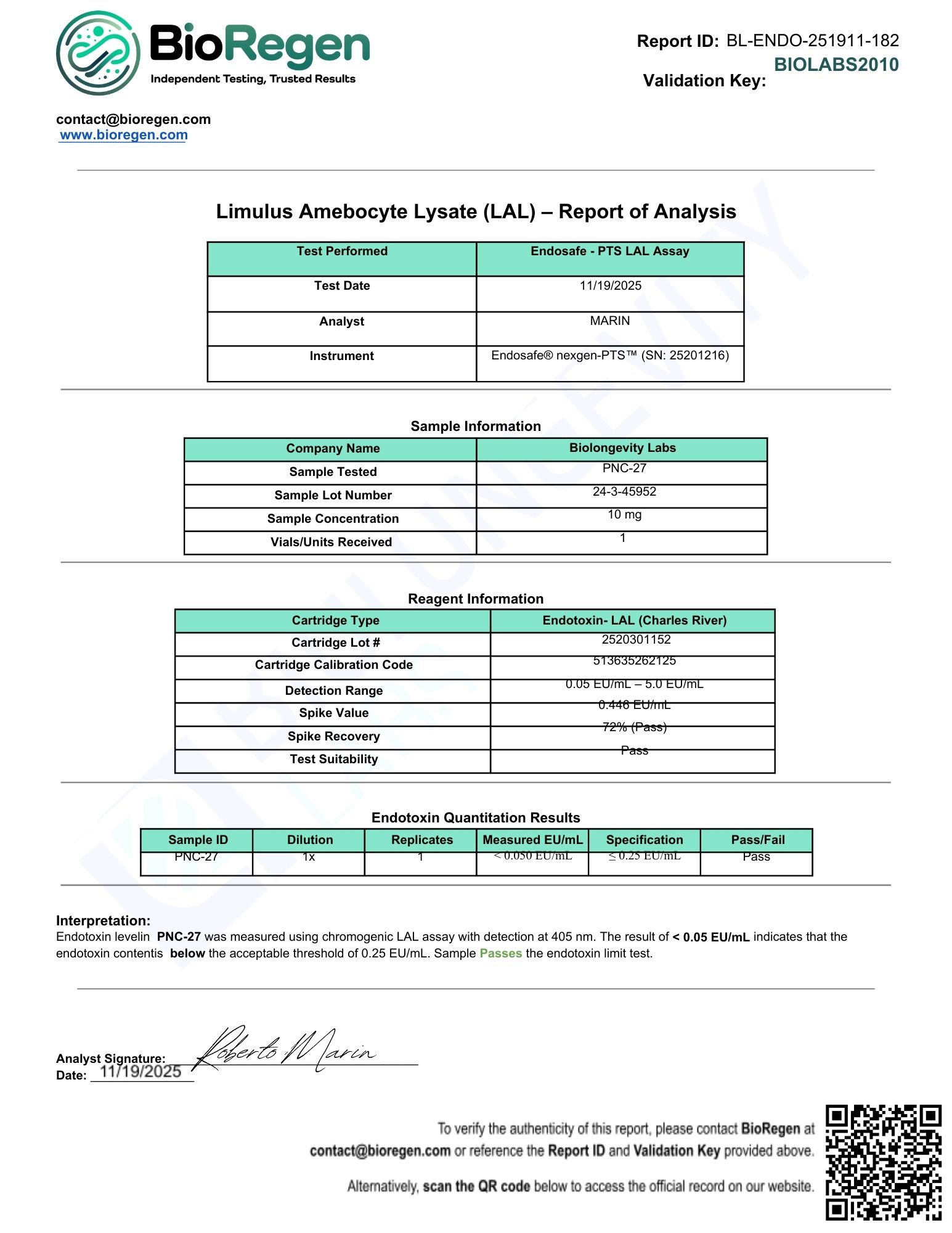
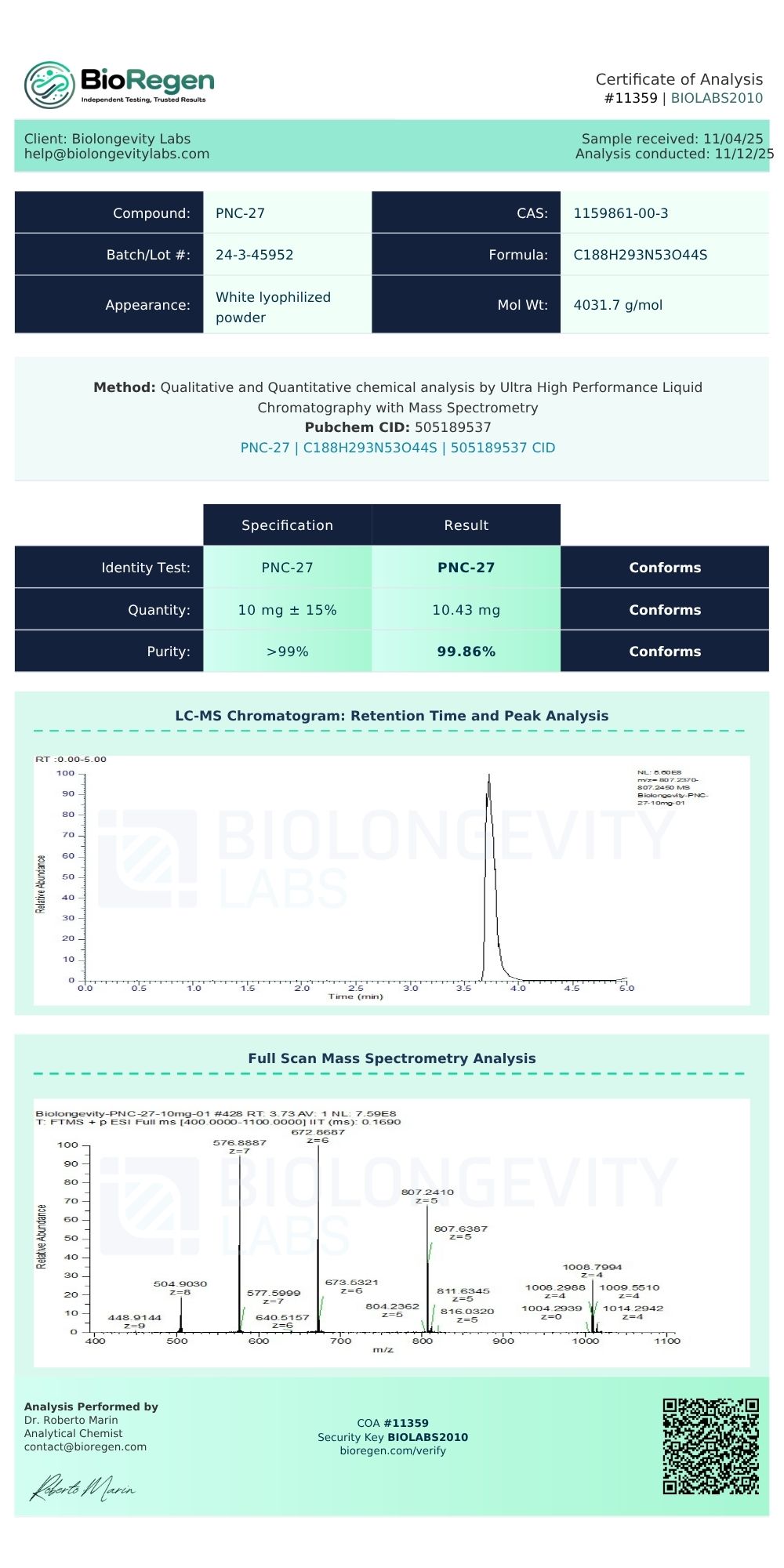
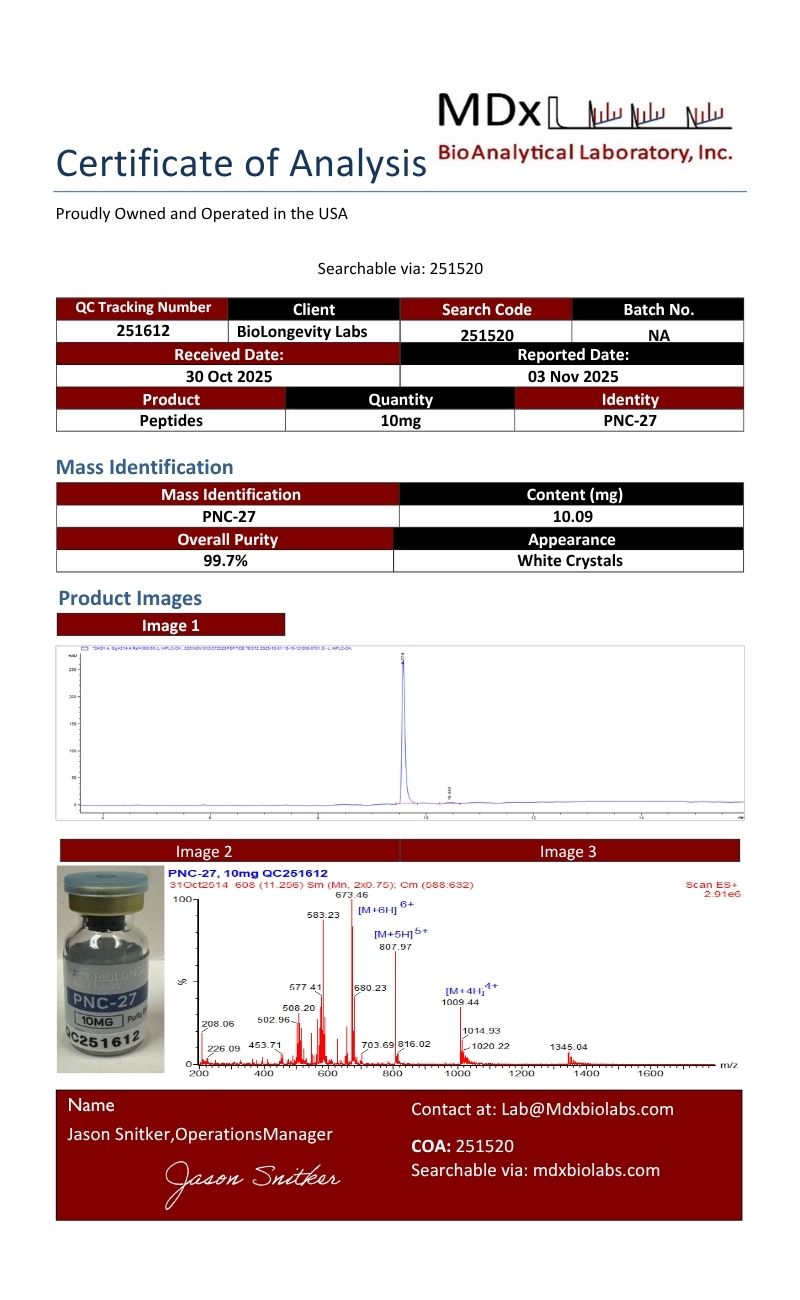
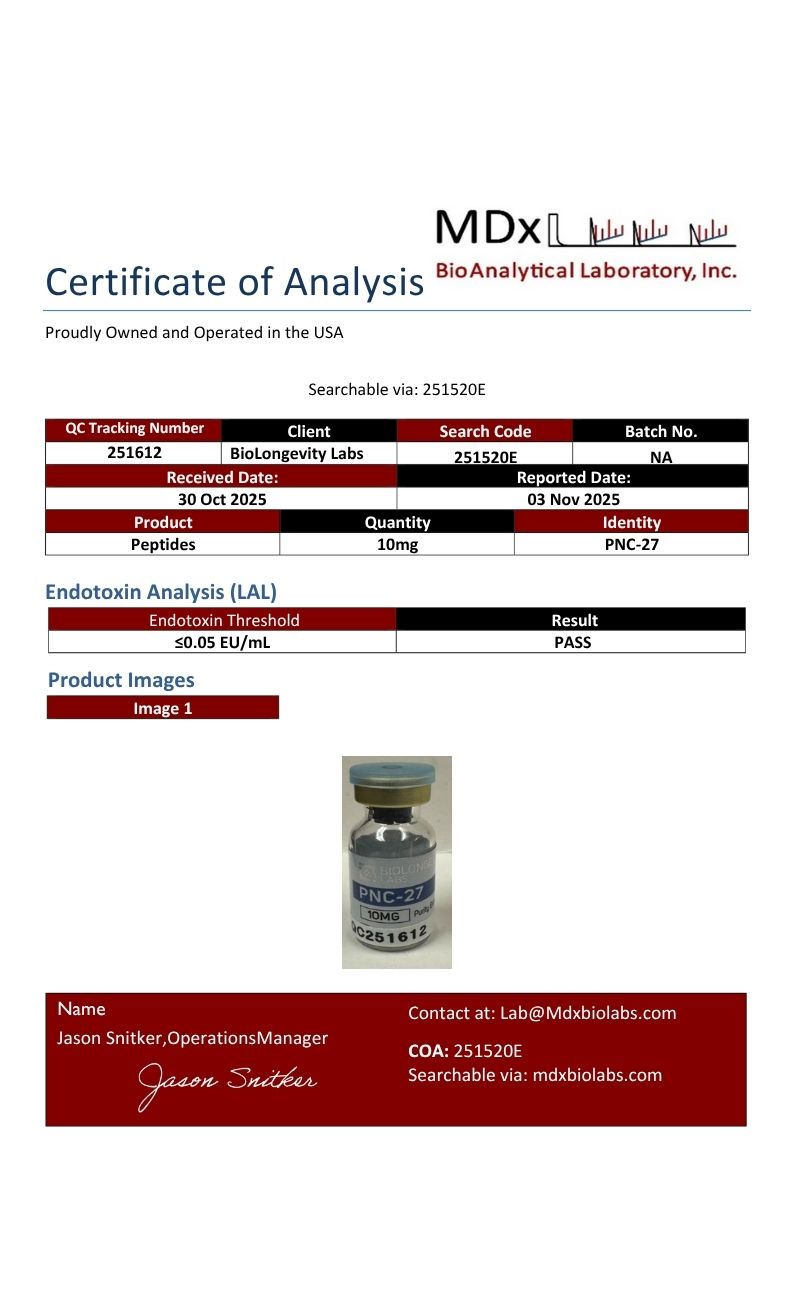
A Certificate of Analysis (COA) is a document that verifies a compound’s identity, purity, and batch quality through independent laboratory testing. Every compound from BioLongevity Labs ships with a COA tied to its specific batch, so researchers can confirm exactly what they received before it enters a protocol.
Each COA reports results from third-party laboratory analysis, including:
- Ultra-high-performance liquid chromatography with mass spectrometry (UHPLC-MS) for purity, typically confirmed at 99% or higher
- Mass identification for molecular confirmation and content quantitation
- Endotoxin quantitation by Limulus amebocyte lysate (LAL) assay where applicable
- Visual and physical characterization of the finished material
How to verify a COA independently
Every certificate can be checked against the issuing laboratory’s own records, not just the copy hosted here. Verification does not depend on BioLongevity Labs.
- MDx BioAnalytical Laboratory certificates carry a QC tracking number and a search code. Newer certificates also carry a QR code. Scan the code, or enter the search code at mdxbiolabs.com, to pull the official record.
- BioRegen reports of analysis carry a Report ID and a Validation Key. Scan the QR code on the certificate to open the official record, or reference both identifiers when contacting the laboratory at the address printed on the report.
- SafeCert Labs certificates, which appear on a number of earlier batches, carry a COA number and the signature of the reporting chemist. Reference that number when requesting confirmation from the laboratory directly.
Batches are frequently tested by both laboratories independently. When two certificates exist for the same lot, each one resolves at its own issuing laboratory, which lets a researcher confirm the same material twice through two unrelated sources.
COAs are sourced from independent certified labs rather than in-house testing alone, giving researchers a verifiable record of molecular integrity for each batch. All compounds are supplied for research use only.
Review the COAs for this batch below, or browse the full COA library.
Endotoxin PNC-27
PNC-27 (11359)
PNC-27 (251520)
PNC-27 (251520E)
×
![]()