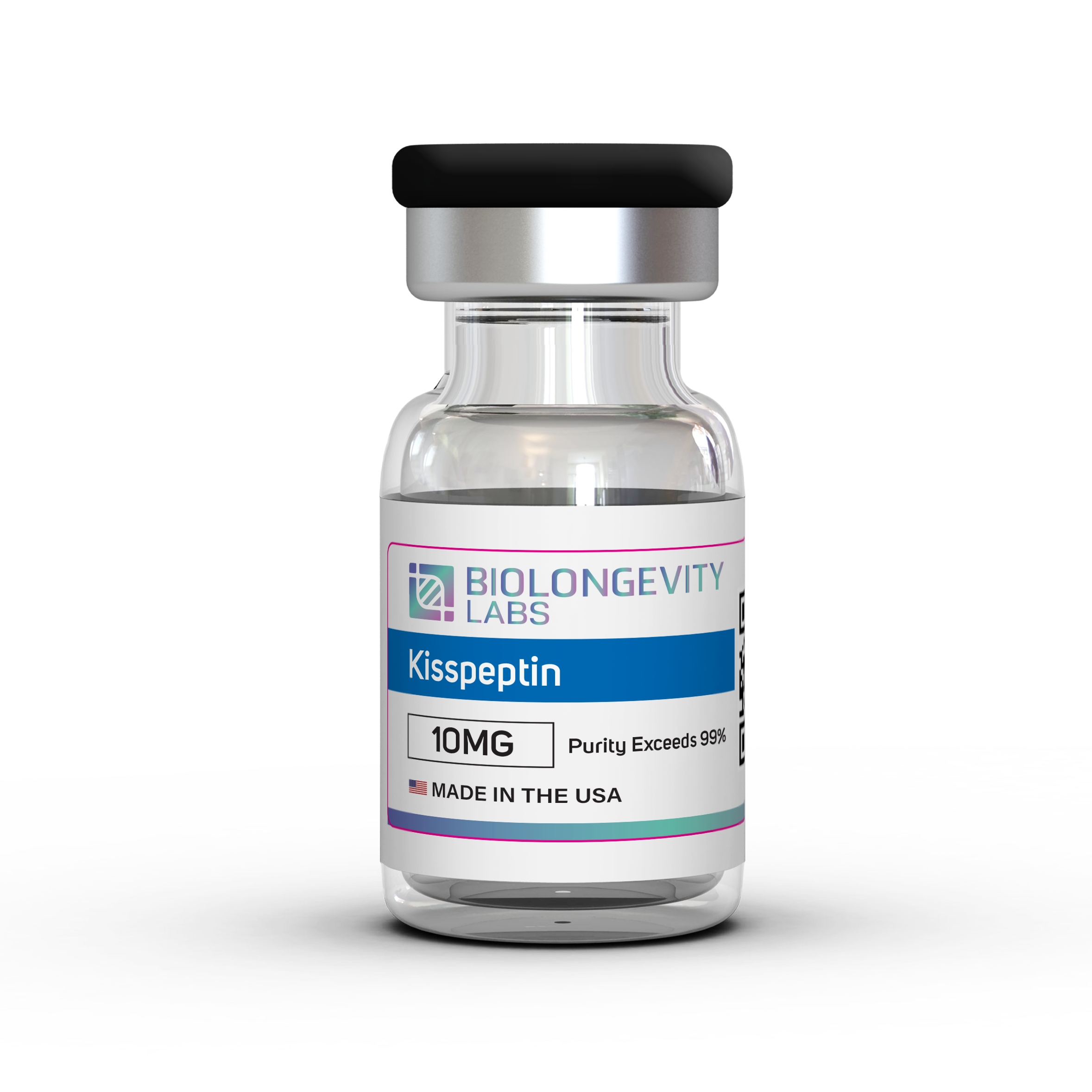
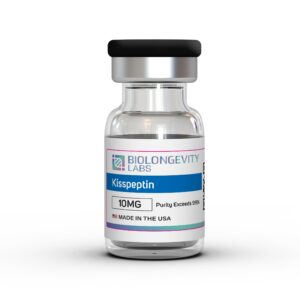
Kisspeptin-10 Product Description
Kisspeptin-10 is a synthetic decapeptide corresponding to the C-terminal 45-54 fragment of the KISS1 gene product. It carries the sequence Tyr-Asn-Trp-Asn-Ser-Phe-Gly-Leu-Arg-Phe-NH₂ and ends in a C-terminal amide that defines the kisspeptin RFamide family.
It is the shortest member of the kisspeptin family that retains binding activity at its cognate receptor, KISS1R, also designated GPR54. Longer family members include kisspeptin-54, kisspeptin-14, and kisspeptin-13, all of which share the same C-terminal decapeptide.
The compound is produced through controlled peptide synthesis and supplied as a lyophilized powder for stability during storage and handling. It is characterized in laboratory research on neuroendocrine signaling and cell-motility pathways.
Compound Information
| Property |
Value |
| CAS Number |
374675-21-5 |
| PubChem CID |
25240297 |
| Molecular Formula |
C₆₃H₈₃N₁₇O₁₄ |
| Molecular Weight |
1302.5 g/mol |
| Monoisotopic Mass |
1301.63 Da |
| Amino Acid Sequence |
Tyr-Asn-Trp-Asn-Ser-Phe-Gly-Leu-Arg-Phe-NH₂ (YNWNSFGLRF-NH₂) |
| Sequence Length |
10 residues (decapeptide) |
| InChIKey |
RITKWYDZSSQNJI-INXYWQKQSA-N |
| Source |
Synthetic |
| Synonyms |
KP-10, Metastin (45-54), KiSS-1 (45-54) |
| Purity |
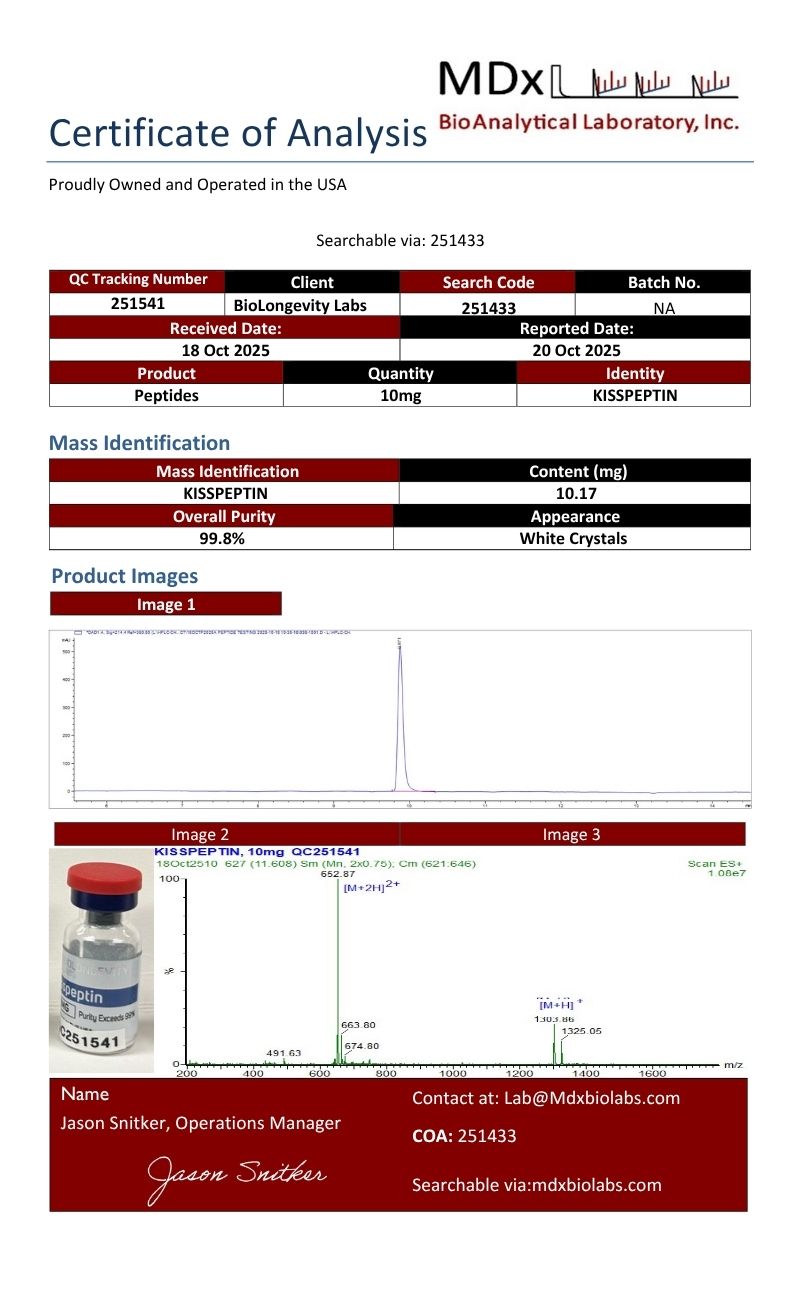
≥99% (HPLC) |
| Appearance |
Lyophilized white powder |
| Solubility |
Soluble in water; bacteriostatic water for reconstitution |
| Storage |
-20°C, protect from light |
Kisspeptin-10 Peptide Structure

Source: PubChem
Storage and Handling
- Store the lyophilized compound at -20°C, protected from light.
- After reconstitution, store at 2-8°C and use promptly.
- Maintain aseptic handling to preserve compound integrity.
Lyophilized Format
This compound ships in lyophilized (freeze-dried) form. Freeze-drying supports long-term storage stability and preserves compound integrity. No fillers are added.
Product Usage
This product is intended as a research chemical only. This designation allows use strictly for in vitro testing and laboratory experimentation. All product information on this website is for educational purposes only. This product should be handled only by licensed, qualified professionals. It is not a drug, food, or cosmetic and may not be misbranded, misused, or mislabeled.
Research Applications
| Research Area |
In Vitro Application |
| Receptor signaling |
Characterization of KISS1R (GPR54) binding and downstream ERK1/2 activation in receptor-expressing cell lines |
| Cell motility |
Study of migration and invasion pathways in trophoblast-derived cell models |
| Extracellular matrix |
Investigation of matrix metalloproteinase and tissue inhibitor expression in fibroblast cultures |
| Neuronal models |
Examination of α-synuclein-linked apoptosis in SH-SY5Y-derived neurons |
| Radiolabeling chemistry |
Evaluation of chelator-conjugated analogues for receptor-targeted imaging research |
What Research Shows
Kisspeptin-10 is the shortest fragment of the kisspeptin family that binds KISS1R (GPR54). Research on the KiSS-1/GPR54 system has mapped its signaling across reproductive regulation and metastasis-related pathways in a range of cell and animal models [1].
In receptor-transfected cell systems, kisspeptin-10 and a DOTA-conjugated analogue produced comparable KISS1R activation, measured by inositol phosphate accumulation in KISS1R-expressing HEK293 cells. The conjugate retained receptor functionality and was characterized for its serum stability period [2].
These findings anchor several distinct research threads, from cell motility to neuronal and cardiac models.
Cell Motility and Signaling Models
In the HTR8SVneo placental cell line, kisspeptin-10 was associated with reduced cell migration through an ERK1/2-p90rsk-GSK3β-FAK signaling feedback loop [3].
In first-trimester trophoblast cultures, KP-10 raised intracellular calcium and was characterized as an inhibitor of cell motility without changing proliferation [4]. Related in vitro work reported altered expression of matrix metalloproteinases, their tissue inhibitors, and VEGF-A downstream of KISS1R and ERK1/2 [5]. These reproductive-model studies sit alongside other neuroendocrine research compounds in the catalog.
Neuronal and Cardiac Fibroblast Models
In choline acetyltransferase-positive SH-SY5Y neurons engineered to overexpress wild-type or E46K mutant α-synuclein, kisspeptin-10 was associated with reduced α-synuclein-linked apoptosis and mitochondrial depolarization, in a KISS1R-independent manner [6].
In cardiac fibroblast cultures, kisspeptin-10 was associated with changes in intracellular collagen content and focal adhesion kinase phosphorylation, alongside shifts in matrix metalloproteinase and tissue inhibitor release [7].
References
- Zhu N, Zhao M, Song Y, Ding L, Ni Y. (2020). The KiSS-1/GPR54 system: Essential roles in physiological homeostasis and cancer biology. Genes & Diseases, 9(1), 28-40. https://doi.org/10.1016/j.gendis.2020.07.008
- Kleynhans J, Reeve R, Driver CHS, Marjanovic-Painter B, Sathekge M, Zeevaart JR, Ebenhan T, Millar RP. (2025). Synthesis and characterisation of DOTA-kisspeptin-10 as a potential gallium-68/lutetium-177 pan-tumour radiopharmaceutical. Journal of Neuroendocrinology, 37(3), e13487. https://doi.org/10.1111/jne.13487
- Roseweir AK, Katz AA, Millar RP. (2012). Kisspeptin-10 inhibits cell migration in vitro via a receptor-GSK3 beta-FAK feedback loop in HTR8SVneo cells. Placenta, 33(5), 408-415. https://doi.org/10.1016/j.placenta.2012.02.001
- Bilban M, Ghaffari-Tabrizi N, Hintermann E, Bauer S, Molzer S, Zoratti C, Malli R, Sharabi A, Hiden U, Graier W, Knöfler M, Andreae F, Wagner O, Quaranta V, Desoye G. (2004). Kisspeptin-10, a KiSS-1/metastin-derived decapeptide, is a physiological invasion inhibitor of primary human trophoblasts. Journal of Cell Science, 117(Pt 8), 1319-1328. https://doi.org/10.1242/jcs.00971
- Francis VA, Abera AB, Matjila M, Millar RP, Katz AA. (2014). Kisspeptin regulation of genes involved in cell invasion and angiogenesis in first trimester human trophoblast cells. PLoS One, 9(6), e99680. https://doi.org/10.1371/journal.pone.0099680
- Simon C, Soga T, Parhar I. (2023). Kisspeptin-10 Mitigates α-Synuclein-Mediated Mitochondrial Apoptosis in SH-SY5Y-Derived Neurons via a Kisspeptin Receptor-Independent Manner. International Journal of Molecular Sciences, 24(7), 6056. https://doi.org/10.3390/ijms24076056
- Radwańska P, Gałdyszyńska M, Piera L, Drobnik J. (2023). Kisspeptin-10 increases collagen content in the myocardium by focal adhesion kinase activity. Scientific Reports, 13(1), 19977. https://doi.org/10.1038/s41598-023-47224-3
Certificate of Analysis (COA) for Every Batch
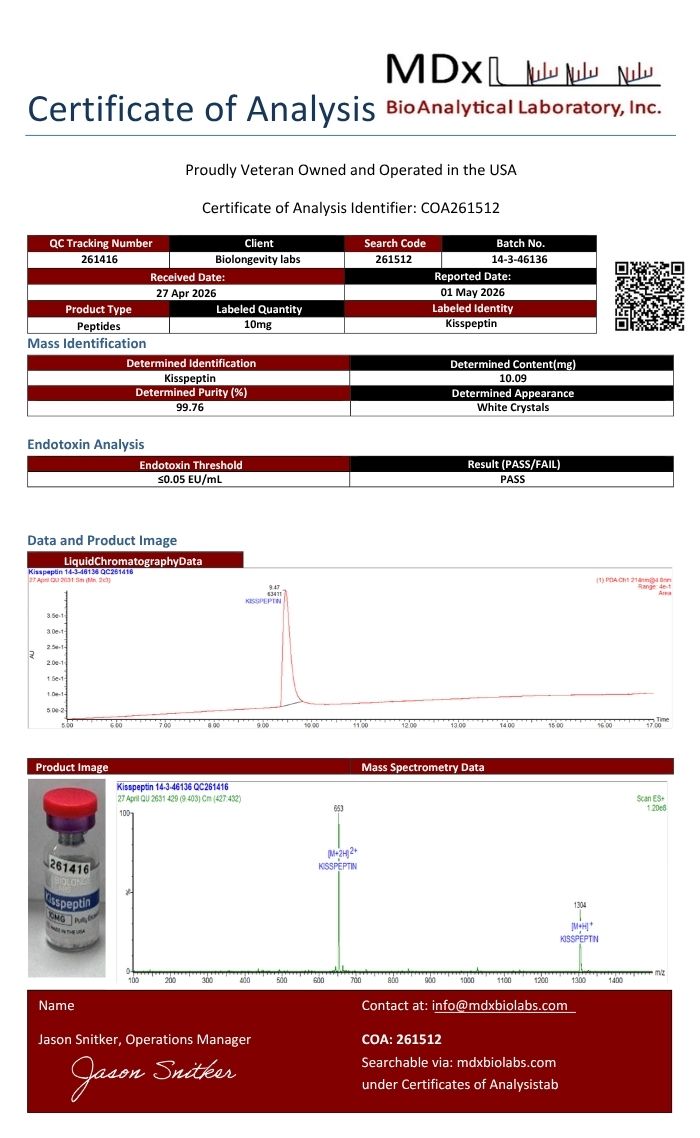
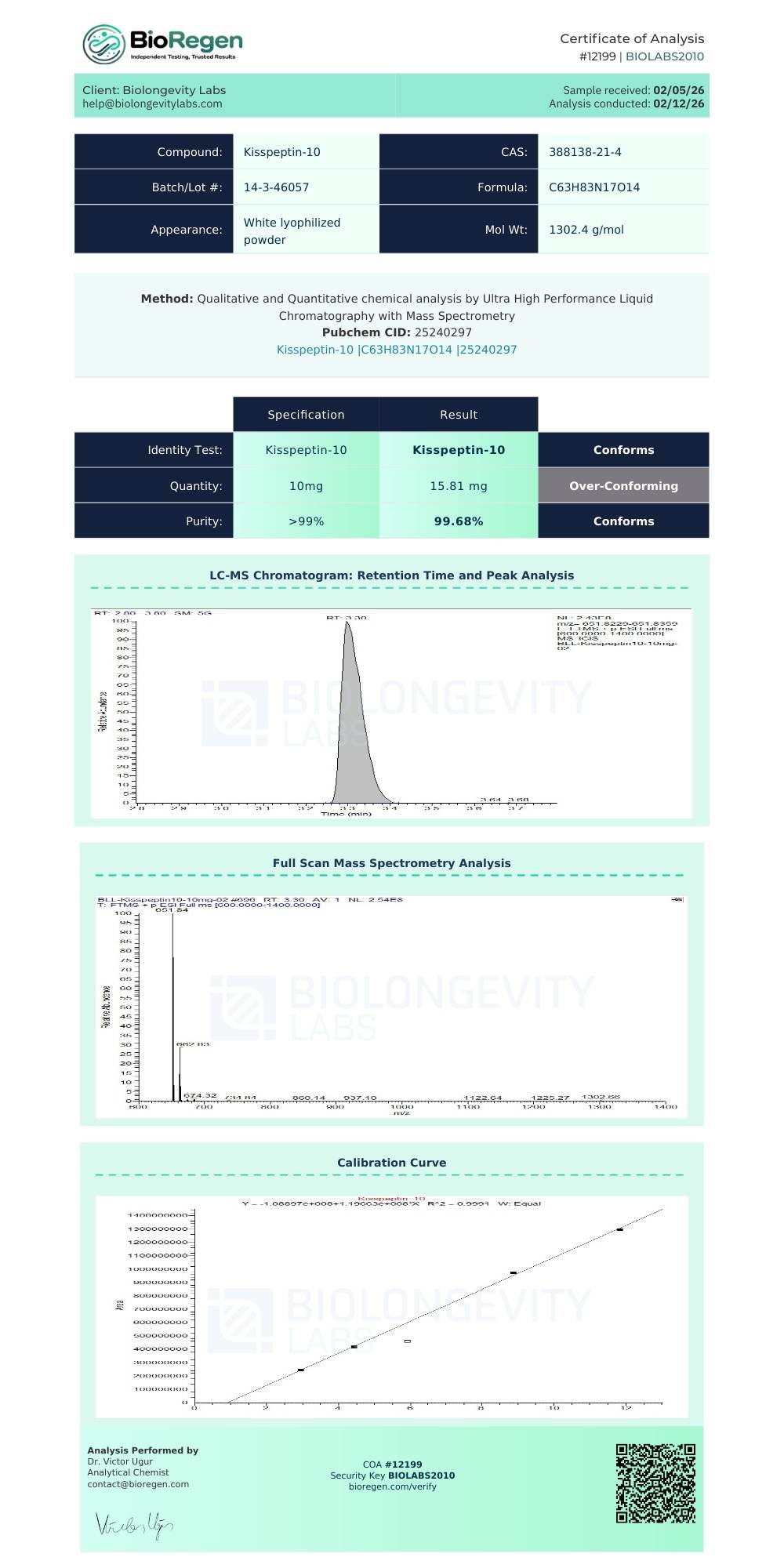
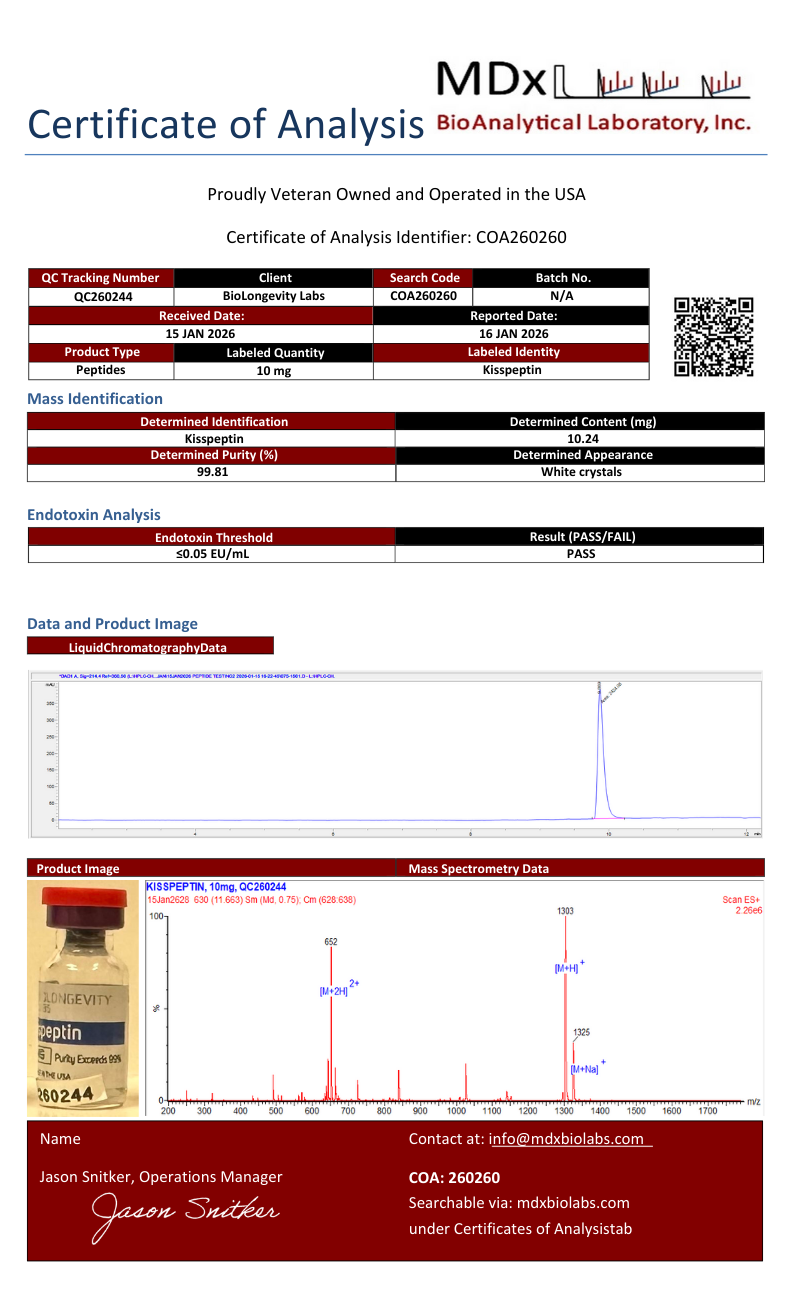
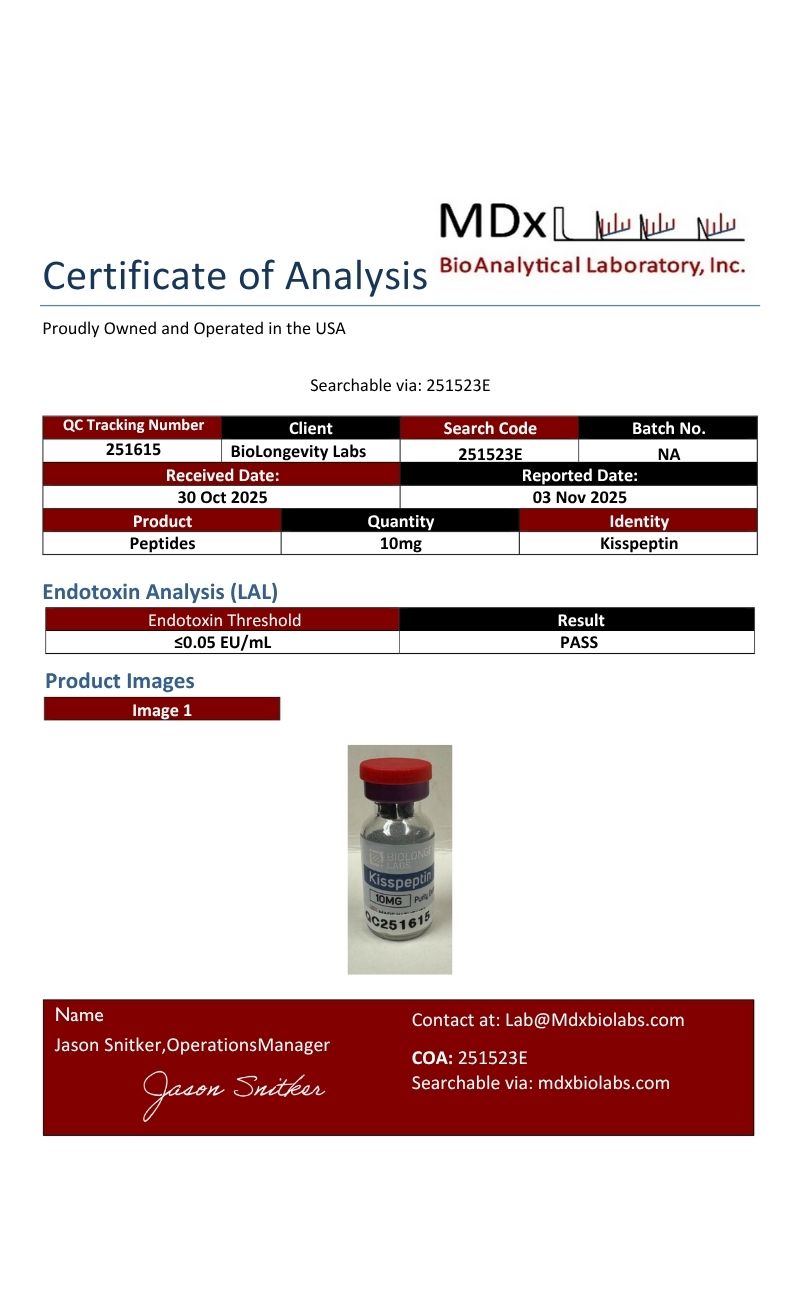
A Certificate of Analysis (COA) is a document that verifies a compound’s identity, purity, and batch quality through independent laboratory testing. Every compound from BioLongevity Labs ships with a COA tied to its specific batch, so researchers can confirm exactly what they received before it enters a protocol.
Each COA reports results from third-party laboratory analysis, including:
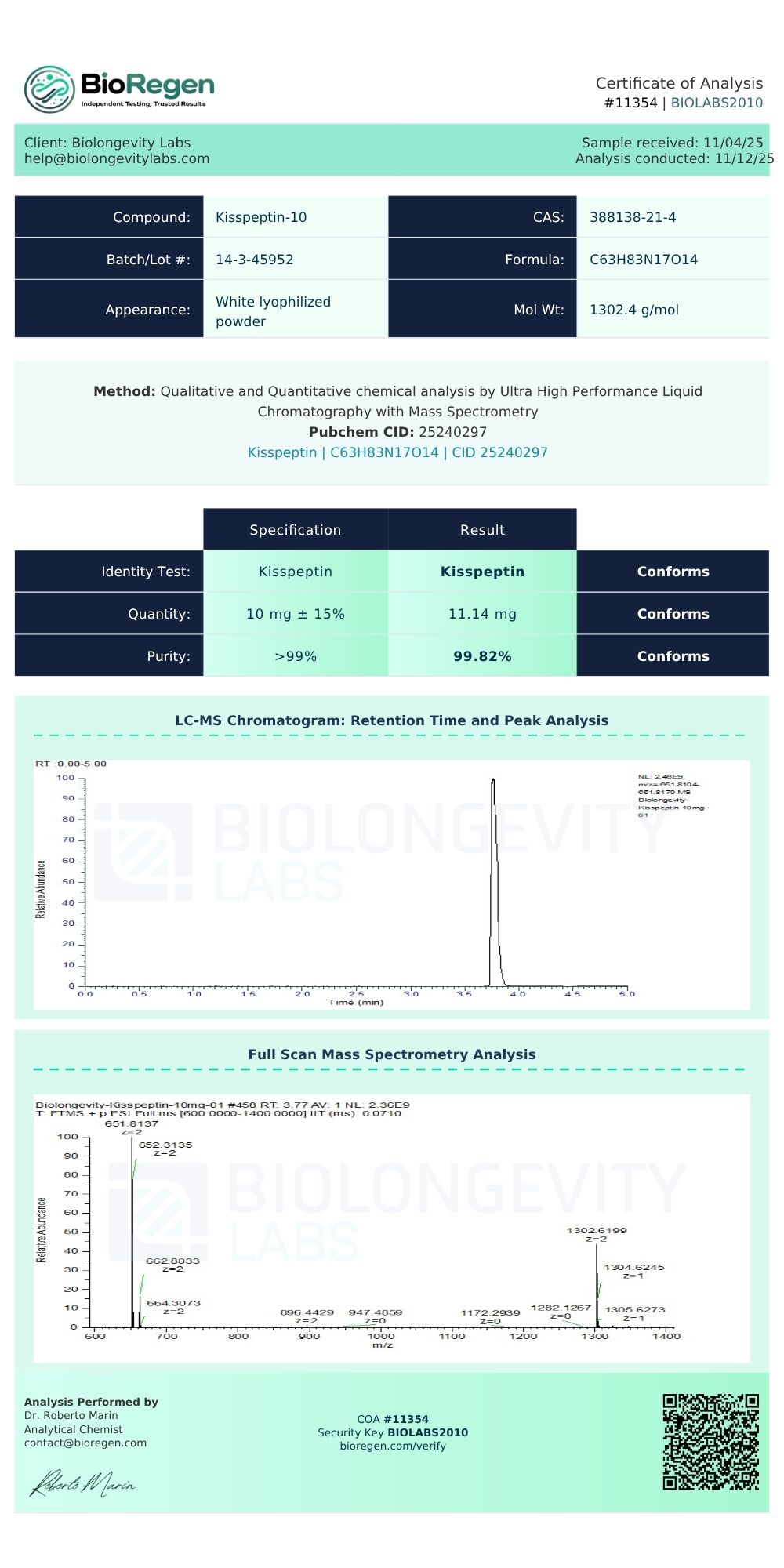
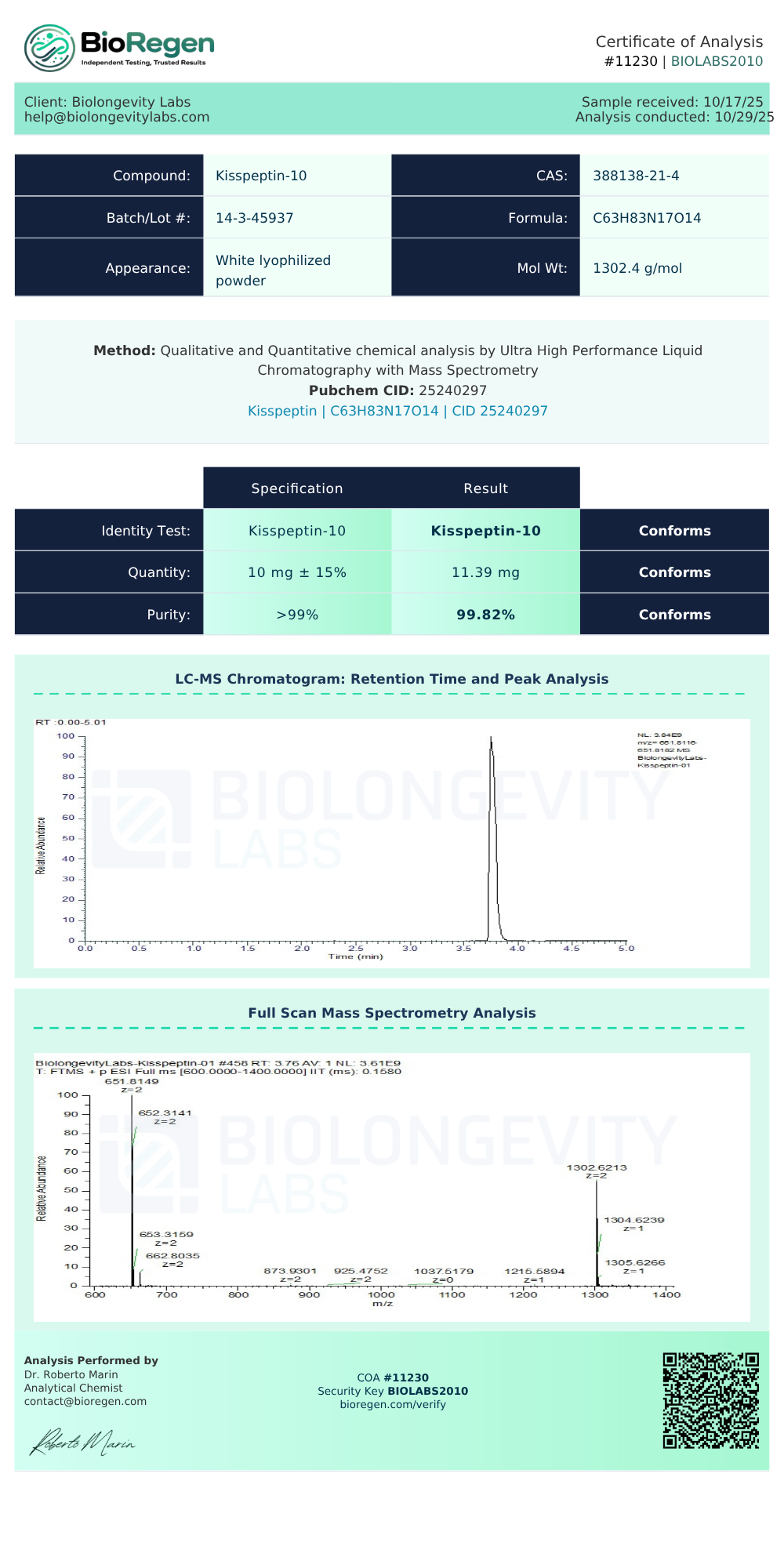
- Ultra-high-performance liquid chromatography with mass spectrometry (UHPLC-MS) for purity, typically confirmed at 99% or higher
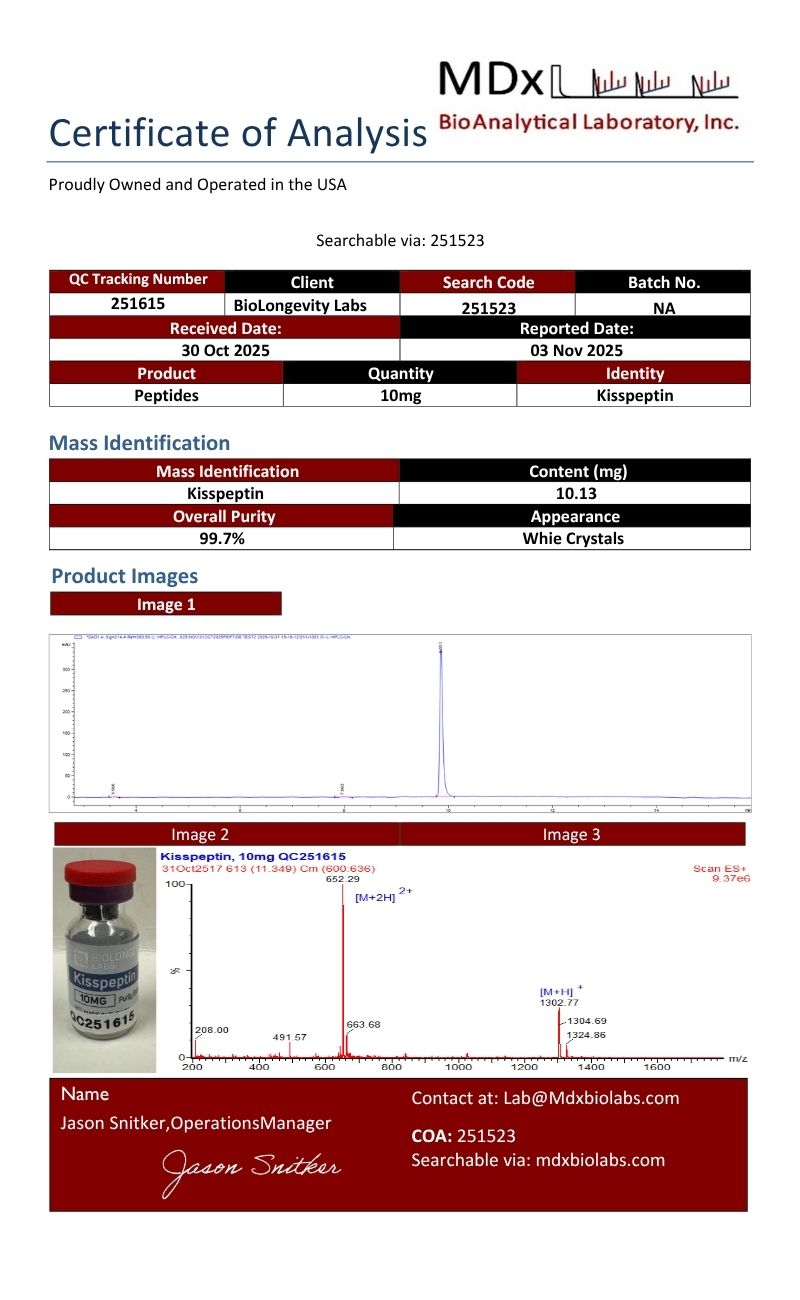
- Mass identification for molecular confirmation and content quantitation
- Endotoxin quantitation by Limulus amebocyte lysate (LAL) assay where applicable
- Visual and physical characterization of the finished material
How to verify a COA independently
Every certificate can be checked against the issuing laboratory’s own records, not just the copy hosted here. Verification does not depend on BioLongevity Labs.
- MDx BioAnalytical Laboratory certificates carry a QC tracking number and a search code. Newer certificates also carry a QR code. Scan the code, or enter the search code at mdxbiolabs.com, to pull the official record.
- BioRegen reports of analysis carry a Report ID and a Validation Key. Scan the QR code on the certificate to open the official record, or reference both identifiers when contacting the laboratory at the address printed on the report.
- SafeCert Labs certificates, which appear on a number of earlier batches, carry a COA number and the signature of the reporting chemist. Reference that number when requesting confirmation from the laboratory directly.
Batches are frequently tested by both laboratories independently. When two certificates exist for the same lot, each one resolves at its own issuing laboratory, which lets a researcher confirm the same material twice through two unrelated sources.
COAs are sourced from independent certified labs rather than in-house testing alone, giving researchers a verifiable record of molecular integrity for each batch. All compounds are supplied for research use only.
Review the COAs for this batch below, or browse the full COA library.
Kisspetin (261416)
Kisspeptin-10 (12199)
Kisspeptin (260260)
Endotoxin Kisspeptin
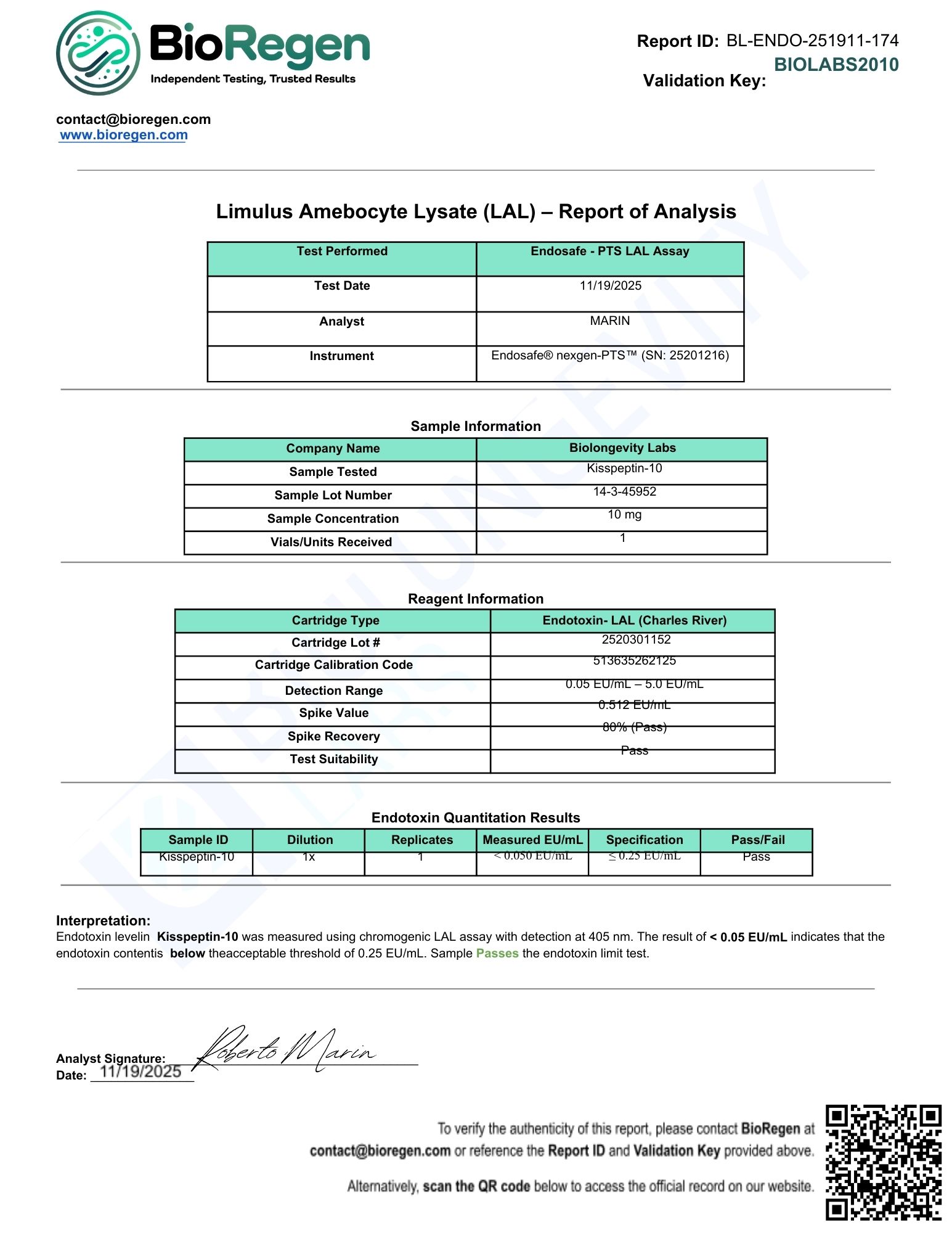
Kisspeptin-10 (11354)
Kisspeptin-10 (11230)
Kisspeptin (251523)
Kisspeptin (251523E)
Kisspeptin(251433)
×
![]()