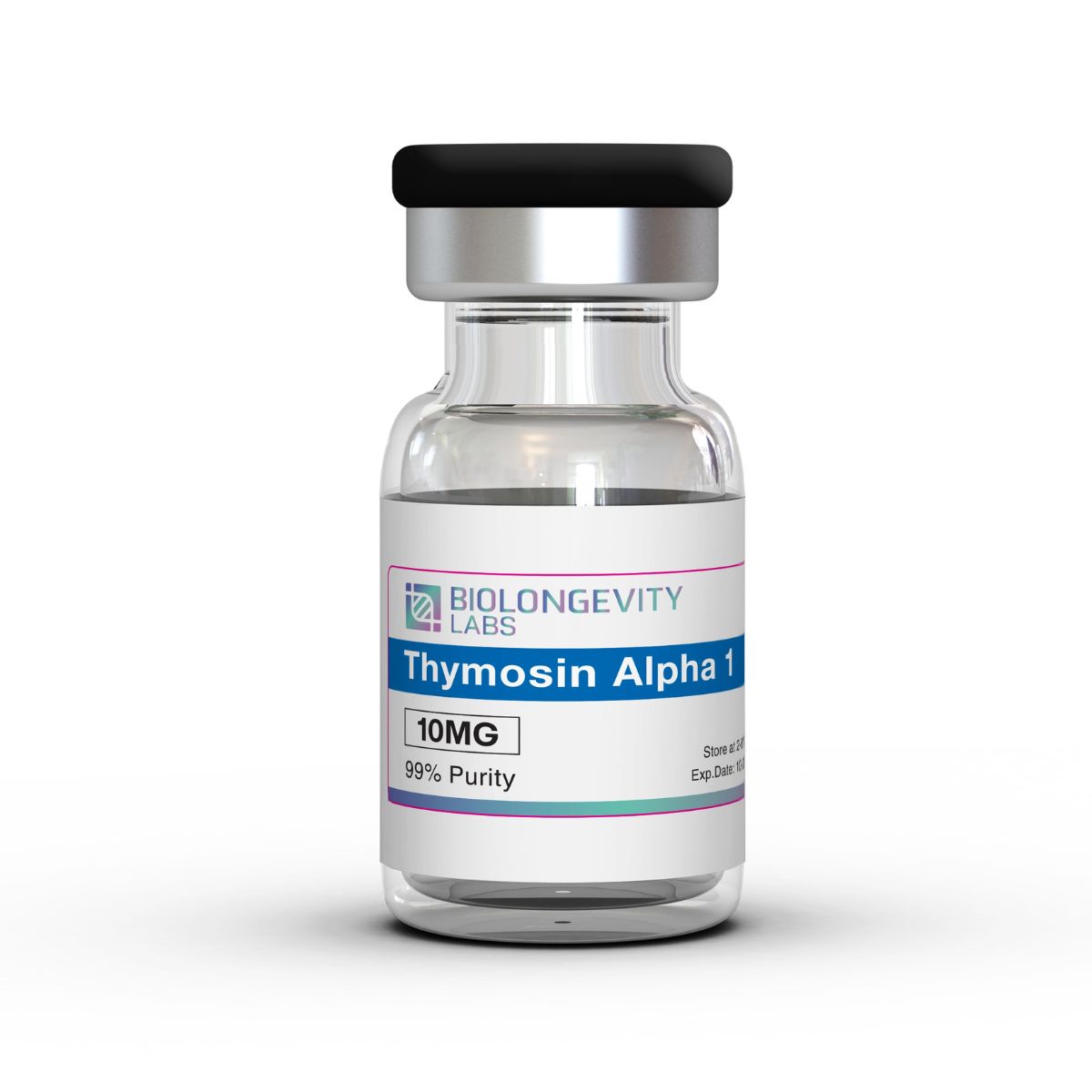
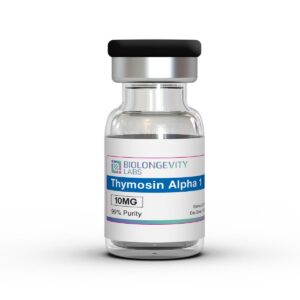
Thymosin Alpha-1 Product Description
Thymosin Alpha 1, also written Tα1 and catalogued under the synonym thymalfasin, was the first peptide isolated from thymic tissue fraction 5 and has been characterized in the literature since the late 1970s. Its sequence is acidic and highly charged, with eight glutamate and three aspartate residues across 28 positions.
The molecule carries an acetyl group on its N-terminal serine, which distinguishes the authentic peptide from unmodified 28-residue analogs and accounts for the 42 Da difference in molecular weight. That modification is reflected in the formula and mass shown below.
Research on this compound sits primarily in immunology, where it is used as a reference reagent in receptor-signaling and cell-maturation assays rather than as a structural or metabolic peptide. The material supplied by BioLongevity Labs is manufactured in the United States and characterized for analytical and experimental evaluation under controlled laboratory conditions.
Compound Specifications
| Property |
Value |
| CAS Number |
62304-98-7 |
| PubChem CID |
16130571 |
| Molecular Formula |
C₁₂₉H₂₁₅N₃₃O₅₅ |
| Molecular Weight |
3108.3 g/mol |
| Amino Acid Sequence (One-Letter) |
Ac-SDAAVDTSSEITTKDLKEKKEVVEEAEN |
| Amino Acid Sequence (Three-Letter) |
Ac-Ser-Asp-Ala-Ala-Val-Asp-Thr-Ser-Ser-Glu-Ile-Thr-Thr-Lys-Asp-Leu-Lys-Glu-Lys-Lys-Glu-Val-Val-Glu-Glu-Ala-Glu-Asn-OH |
| Sequence Length |
28 residues |
| N-Terminal Modification |
Acetylated |
| InChIKey |
NZVYCXVTEHPMHE-ZSUJOUNUSA-N |
| Source |
Synthetic (solid-phase peptide synthesis) |
| Synonyms |
Thymalfasin, Tα1 |
| Purity |
≥99% (HPLC) |
| Appearance |
Lyophilized white powder |
| Solubility |
Soluble in water |
| Storage |
-20°C, protect from light |
| Vial Size |
10 mg |
Storage and Handling
- Store the lyophilized compound at -20°C, protected from light and moisture.
- After reconstitution, store at 2°C to 8°C and use promptly; for extended holds, aliquot and store at -20°C to avoid repeated freeze-thaw cycles.
- Maintain aseptic handling and use sterile reconstitution solvent to preserve compound integrity.
Peptide Structure
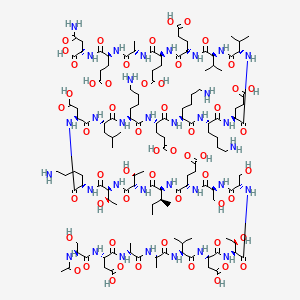
Source: PubChem
Lyophilized Format
This compound ships in lyophilized (freeze-dried) form. Freeze-drying supports long-term storage stability and preserves compound integrity. No fillers are added.
Research Use Disclaimer
Tesamorelin is supplied for research use only. It is not a drug, food, cosmetic, or dietary supplement, has not been evaluated by the FDA, and is for research use only. By purchasing, the buyer confirms the compound will be used solely for in vitro research.
Thymosin Alpha 1 Research
Solution-state NMR work at 800 MHz described a defined conformation for the 28-residue peptide in a trifluoroethanol and water mixture, with an alpha-helical region spanning residues 14 to 26 and two double beta-turns forming a distorted helical arrangement across the N-terminal twelve residues [1]. This structural description underpins most of the receptor-interaction work that followed.
Signaling studies have reported that the peptide acts through Toll-like receptor pathways. In fungus-pulsed dendritic cell models, maturation and interleukin-12 output were reported to proceed via a p38 MAPK and NF-κB dependent route requiring the MyD88 adaptor [2]. Later work in the same system reported that TLR9 and type I interferon receptor signaling were both required for indoleamine 2,3-dioxygenase expression and interleukin-10 output in treated dendritic cell cultures [3]. Researchers working across thymic peptides may find the Thymosin Alpha-1 research guide and the overview of thymulin useful for comparative context.
The threads below cover the two areas where laboratory data is most developed.
Dendritic Cell Culture Models
In murine bone marrow derived dendritic cells, exposure was reported to promote CD4 expression and activation-marker levels, with interleukin-12 output modulated differently depending on whether tumor necrosis factor alpha was present in the culture [4]. Work in monocyte-derived dendritic cells reported that responses diverged by agonist class, with maturation markers and cytokine output moving in opposite directions under viral TLR3 and TLR7/8 stimulation compared with bacterial TLR2 and TLR4 stimulation [5]. Innate effector work has examined phagocytic activity in differentiated macrophage cultures [6].
Intracellular Pathway Studies
In cultured carcinoma cell lines, exposure was reported to raise PTEN expression, with downstream reduction of PI3K, Akt, and mTOR pathway activation and associated changes in Bax, Bcl-2, and cleaved caspase-3 and caspase-9 levels [7]. PTEN status in the line used was reported to correlate with the size of the observed response.
Production methods have been reviewed alongside the biology. Material for research is prepared by solid-phase peptide synthesis, with prokaryotic and eukaryotic expression routes also described in the literature [8].
| Research Area |
In Vitro Application |
| Receptor Signaling |
TLR2, TLR3, TLR4, TLR7/8, and TLR9 agonist co-stimulation assays |
| Dendritic Cell Biology |
Maturation marker panels (MHC II, CD4, CD86) by flow cytometry |
| Cytokine Profiling |
IL-6, IL-8, IL-10, IL-12, and TNF-α quantification by ELISA |
| Innate Effector Models |
Phagocytosis assays in differentiated macrophage cultures |
| Intracellular Signaling |
PTEN, PI3K, Akt, and mTOR pathway immunoblotting |
| Structural Biology |
Solution NMR and circular dichroism conformational analysis |
References
- Elizondo-Riojas MA, Chamow SM, Tuthill CW, Gorenstein DG, Volk DE. (2011). NMR structure of human thymosin alpha-1. Biochemical and Biophysical Research Communications, 416(3-4), 356–361. https://doi.org/10.1016/j.bbrc.2011.11.041
- Romani L, Bistoni F, Gaziano R, Bozza S, Montagnoli C, Perruccio K, Pitzurra L, Bellocchio S, Velardi A, Rasi G, Di Francesco P, Garaci E. (2004). Thymosin alpha 1 activates dendritic cells for antifungal Th1 resistance through toll-like receptor signaling. Blood, 103(11), 4232–4239. https://doi.org/10.1182/blood-2003-11-4036
- Romani L, Bistoni F, Perruccio K, Montagnoli C, Gaziano R, Bozza S, Bonifazi P, Bistoni G, Rasi G, Velardi A, Fallarino F, Garaci E, Puccetti P. (2006). Thymosin alpha1 activates dendritic cell tryptophan catabolism and establishes a regulatory environment for balance of inflammation and tolerance. Blood, 108(7), 2265–2274. https://doi.org/10.1182/blood-2006-02-004762
- Huang Y, Chen Z, Zhou C, Yao H, Li M, Xu C. (2004). The modulation of thymosin alpha 1 in the maturation, differentiation and function of murine bone marrow-derived dendritic cells in the absence or presence of tumor necrosis factor-alpha. International Immunopharmacology, 4(4), 539–546. https://doi.org/10.1016/j.intimp.2004.02.008
- Giacomini E, Severa M, Cruciani M, Etna MP, Rizzo F, Pardini M, Scagnolari C, Garaci E, Coccia EM. (2015). Dual effect of Thymosin α 1 on human monocyte-derived dendritic cell in vitro stimulated with viral and bacterial toll-like receptor agonists. Expert Opinion on Biological Therapy, 15(Suppl 1), S59–S70. https://doi.org/10.1517/14712598.2015.1019460
- Serafino A, Pierimarchi P, Pica F, Andreola F, Gaziano R, Moroni N, Zonfrillo M, Sinibaldi-Vallebona P, Garaci E. (2012). Thymosin α1 as a stimulatory agent of innate cell-mediated immune response. Annals of the New York Academy of Sciences, 1270, 13–20. https://doi.org/10.1111/j.1749-6632.2012.06707.x
- Guo Y, Chang H, Li J, Xu XY, Shen L, Yu ZB, Liu WC. (2015). Thymosin alpha 1 suppresses proliferation and induces apoptosis in breast cancer cells through PTEN-mediated inhibition of PI3K/Akt/mTOR signaling pathway. Apoptosis, 20(8), 1109–1121. https://doi.org/10.1007/s10495-015-1138-9
- Li J, Liu CH, Wang FS. (2010). Thymosin alpha 1: biological activities, applications and genetic engineering production. Peptides, 31(11), 2151–2158. https://doi.org/10.1016/j.peptides.2010.07.026
Certificate of Analysis (COA) for Every Batch
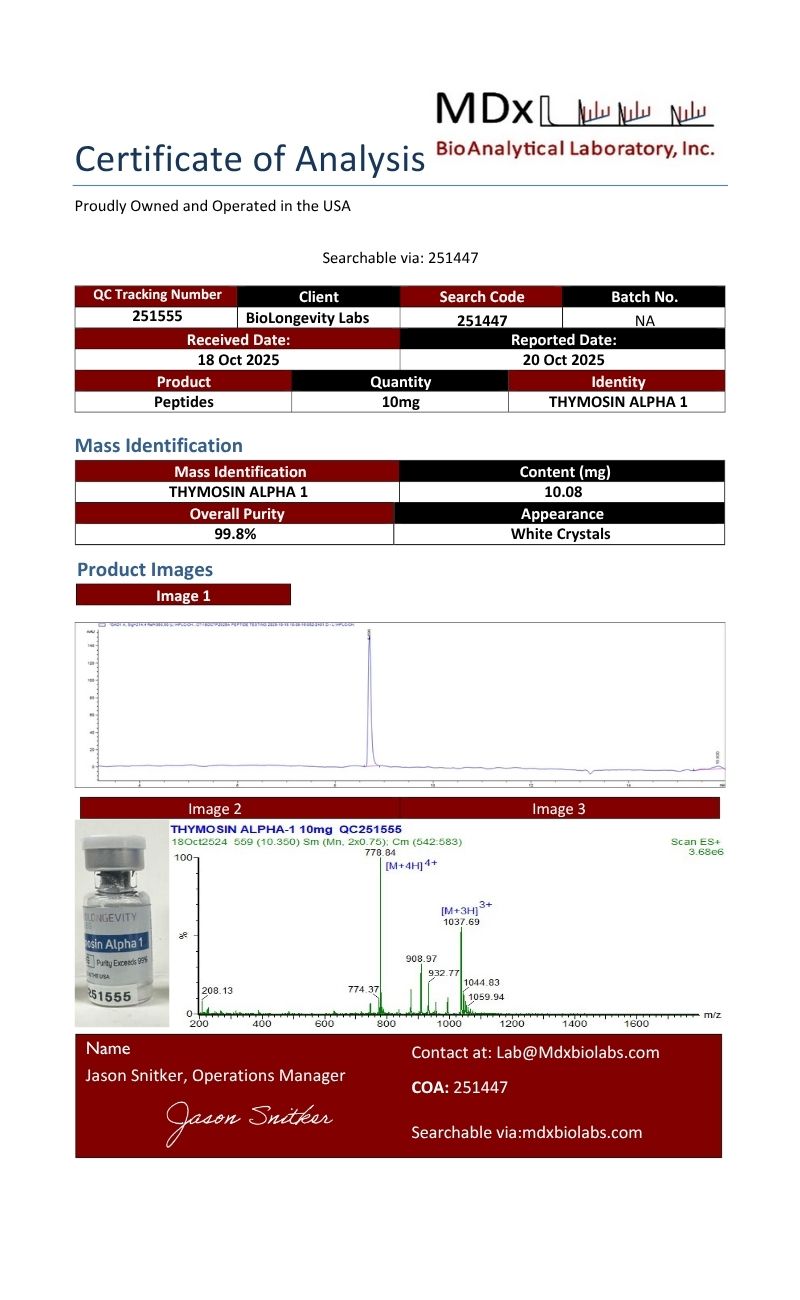
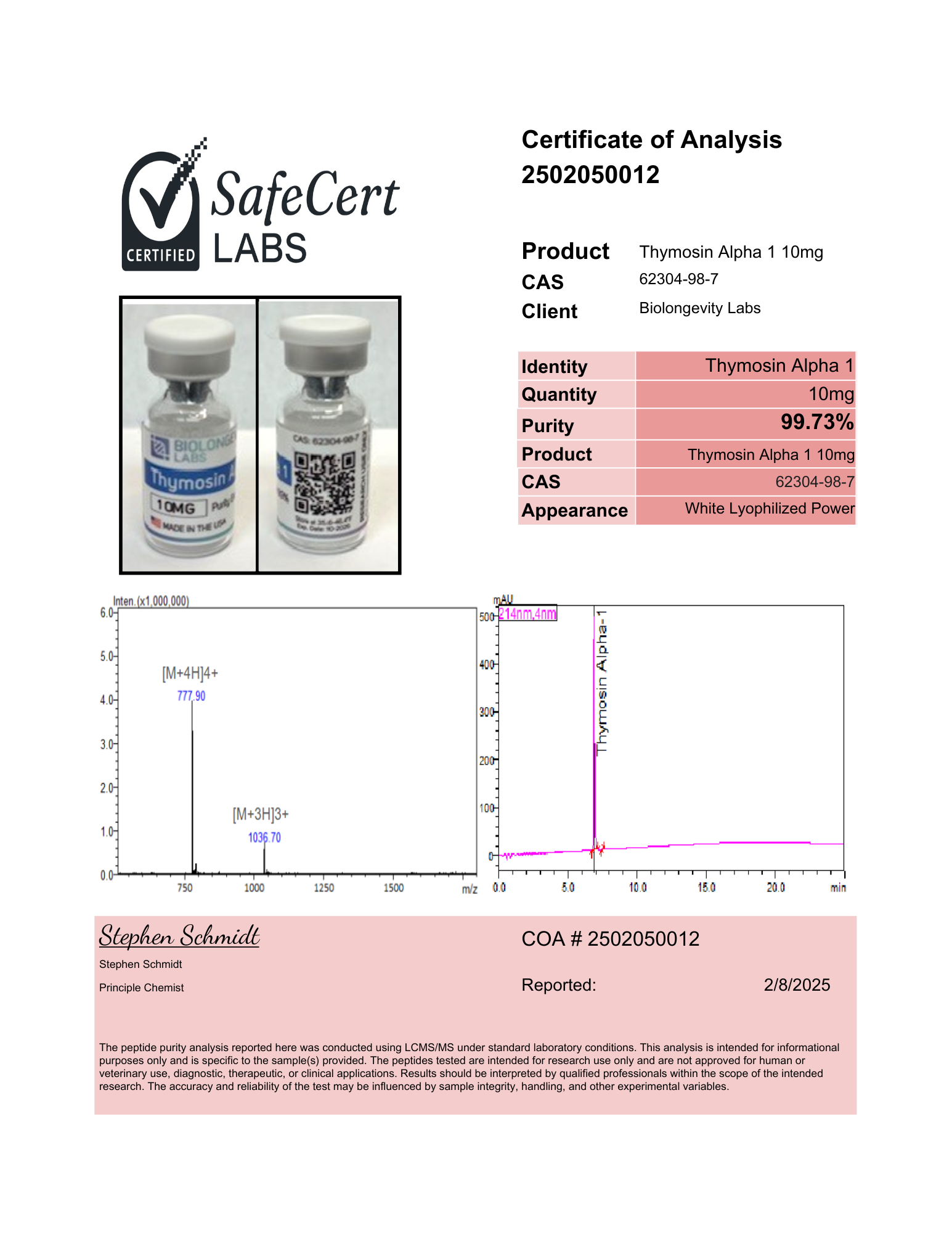
A Certificate of Analysis (COA) is a document that verifies a compound’s identity, purity, and batch quality through independent laboratory testing. Every compound from BioLongevity Labs ships with a COA tied to its specific batch, so researchers can confirm exactly what they received before it enters a protocol.
Each COA reports results from third-party laboratory analysis, including:
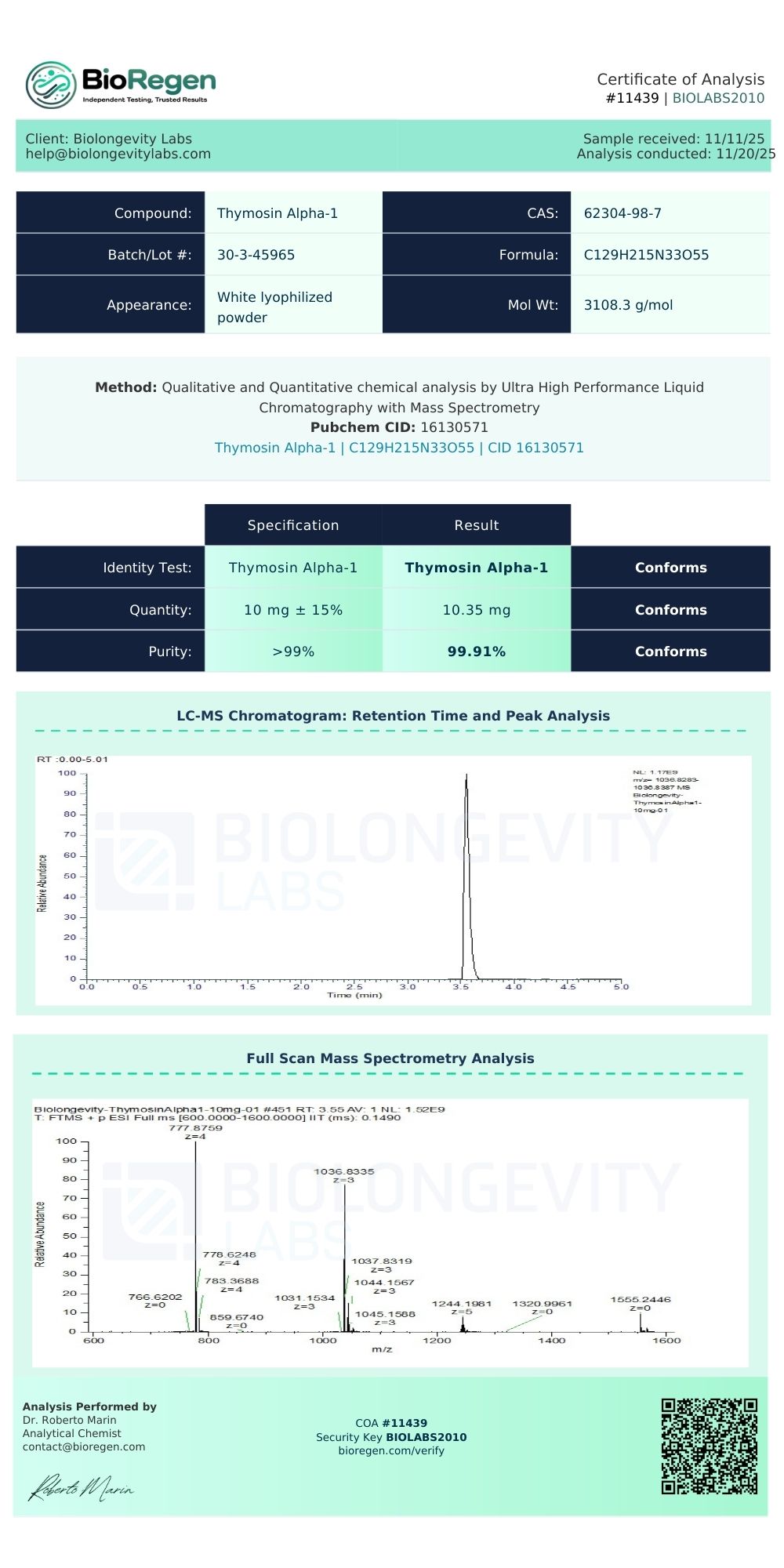
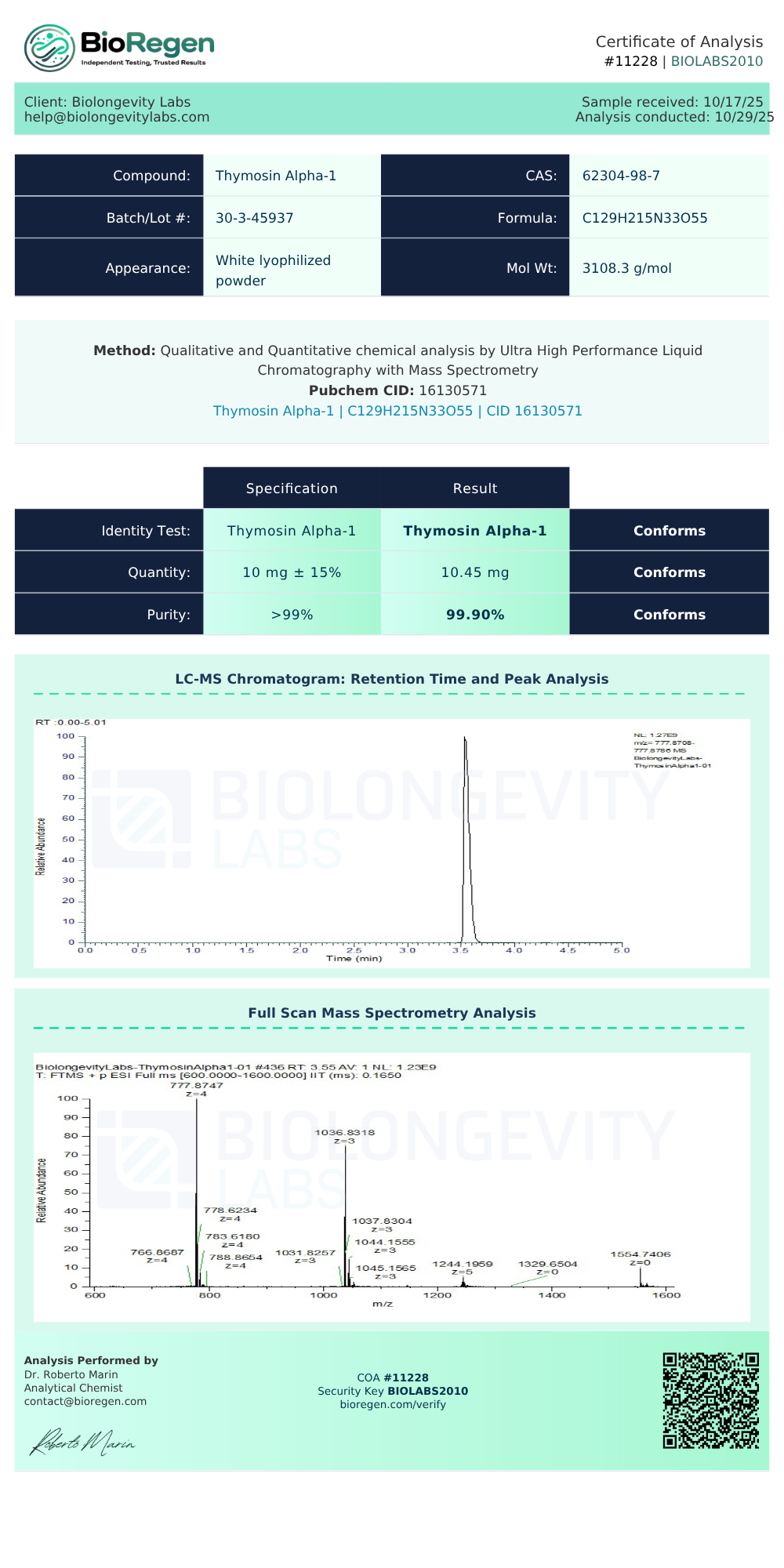
- Ultra-high-performance liquid chromatography with mass spectrometry (UHPLC-MS) for purity, typically confirmed at 99% or higher
- Mass identification for molecular confirmation and content quantitation
- Endotoxin quantitation by Limulus amebocyte lysate (LAL) assay where applicable
- Visual and physical characterization of the finished material
How to verify a COA independently
Every certificate can be checked against the issuing laboratory’s own records, not just the copy hosted here. Verification does not depend on BioLongevity Labs.
- MDx BioAnalytical Laboratory certificates carry a QC tracking number and a search code. Newer certificates also carry a QR code. Scan the code, or enter the search code at mdxbiolabs.com, to pull the official record.
- BioRegen reports of analysis carry a Report ID and a Validation Key. Scan the QR code on the certificate to open the official record, or reference both identifiers when contacting the laboratory at the address printed on the report.
- SafeCert Labs certificates, which appear on a number of earlier batches, carry a COA number and the signature of the reporting chemist. Reference that number when requesting confirmation from the laboratory directly.
Batches are frequently tested by both laboratories independently. When two certificates exist for the same lot, each one resolves at its own issuing laboratory, which lets a researcher confirm the same material twice through two unrelated sources.
COAs are sourced from independent certified labs rather than in-house testing alone, giving researchers a verifiable record of molecular integrity for each batch. All compounds are supplied for research use only.
Review the COAs for this batch below, or browse the full COA library.
Thymosin Alpha-1 (11439)
Thymosin Alpha-1 (11228)
Thymosin Alpha 1 (251447)
Thymosin-Alpha-1(2502050012)
×
![]()