Oxytocin Research
The oxytocin receptor is a class I G protein-coupled receptor that couples primarily through Gq proteins to phospholipase C-beta. Comprehensive reviews of the receptor system describe how the high-affinity receptor state depends on both magnesium and cholesterol, which appear to act as allosteric modulators of ligand binding [1]. Receptor mapping work has since identified OXTR expression in a broad set of cultured cell types, including bone cells, myoblasts, cardiomyocytes, and endothelial cells [2].
Signaling studies have characterized the downstream cascades the receptor activates. OXTR can engage either Gq or Gi proteins and, depending on cellular context, recruits MAPK, PKC, PLC, and CaMK pathways that converge on transcription factors such as CREB and MEF-2 [3]. Cellular responses recorded in these systems include changes in neurite outgrowth and cell viability.
Structural biology has added a further layer of detail. X-ray crystallography and cryo-electron microscopy have resolved the oxytocin receptor in complex with its natural agonist and with different signaling partners, including G proteins and beta-arrestins, giving a direct view of the orthosteric ligand binding pocket and the receptor interfaces involved in activation [4]. This structural work is what makes the peptide useful as a reference agonist in rational ligand design.
Beyond receptor pharmacology, oxytocin appears in several distinct experimental literatures. Skeletal cell work has reported OXTR expression in both osteoblast and osteoclast cultures, with receptor-deficient animal models used to characterize the role of the receptor in bone formation parameters [5]. Vascular studies have examined OXTR signaling in endothelial preparations and cerebrovascular models [6]. In hippocampal preparations, OXTR signaling has been studied in relation to neuronal excitability, network oscillatory activity, and synaptic plasticity [7]. Cardiac work has looked at the peptide in relation to stem cell differentiation toward cardiomyocyte phenotypes in culture [8].
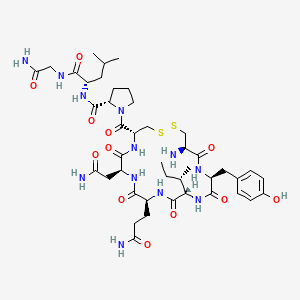
Because oxytocin is a disulfide-bridged peptide, reconstitution technique and buffer choice matter for experimental reproducibility. Laboratories new to this format may find the guide to reconstituting peptides and the peptide stability, handling and storage reference useful before setting up an assay.
Receptor Subtype Selectivity in Assay Design
Oxytocin and vasopressin share seven of nine residues, and their receptors form a single closely related GPCR family comprising V1a, V1b, V2, and OXTR [4]. That homology is the reason selectivity controls are standard in binding work with this peptide, and it is also why comparative receptor studies frequently run oxytocin and vasopressin analogues side by side [1].
| Research Area |
In Vitro Application |
| Receptor pharmacology |
Reference orthosteric agonist in OXTR binding and competition assays |
| GPCR signal transduction |
Characterization of Gq and Gi coupling, calcium flux, and MAPK cascade activation |
| Structural biology |
Agonist-bound receptor complexes for cryo-EM and crystallographic analysis |
| Skeletal cell models |
Receptor expression profiling in osteoblast and osteoclast cultures |
| Vascular and neuronal cell models |
OXTR signaling studies in endothelial and hippocampal preparations |
References
- Gimpl G, Fahrenholz F. (2001). The oxytocin receptor system: structure, function, and regulation. Physiological Reviews. https://doi.org/10.1152/physrev.2001.81.2.629
- Zingg HH, Laporte SA. (2003). The oxytocin receptor. Trends in Endocrinology and Metabolism. https://doi.org/10.1016/S1043-2760(03)00080-8
- Jurek B, Neumann ID. (2018). The Oxytocin Receptor: From Intracellular Signaling to Behavior. Physiological Reviews. https://doi.org/10.1152/physrev.00031.2017
- Bous J, Fouillen A, Orcel H, Granier S, Bron P, Mouillac B. (2023). Structures of the arginine-vasopressin and oxytocin receptor signaling complexes. Vitamins and Hormones. https://doi.org/10.1016/bs.vh.2022.12.003
- Colaianni G, Sun L, Zaidi M, Zallone A. (2014). Oxytocin and bone. American Journal of Physiology: Regulatory, Integrative and Comparative Physiology. https://pmc.ncbi.nlm.nih.gov/articles/PMC4200383/
- McKay EC, Counts SE. (2020). Oxytocin Receptor Signaling in Vascular Function and Stroke. Frontiers in Neuroscience. https://pmc.ncbi.nlm.nih.gov/articles/PMC7544744/
- Lin YT, Hsu KS. (2018). Oxytocin receptor signaling in the hippocampus: Role in regulating neuronal excitability, network oscillatory activity, synaptic plasticity and social memory. Progress in Neurobiology. https://doi.org/10.1016/j.pneurobio.2018.10.003
- Jankowski M, Gonzalez-Reyes A, Noiseux N, Gutkowska J. (2012). Oxytocin in the heart regeneration. Recent Patents on Cardiovascular Drug Discovery. https://doi.org/10.2174/157489012801227210
Certificate of Analysis (COA) for Every Batch
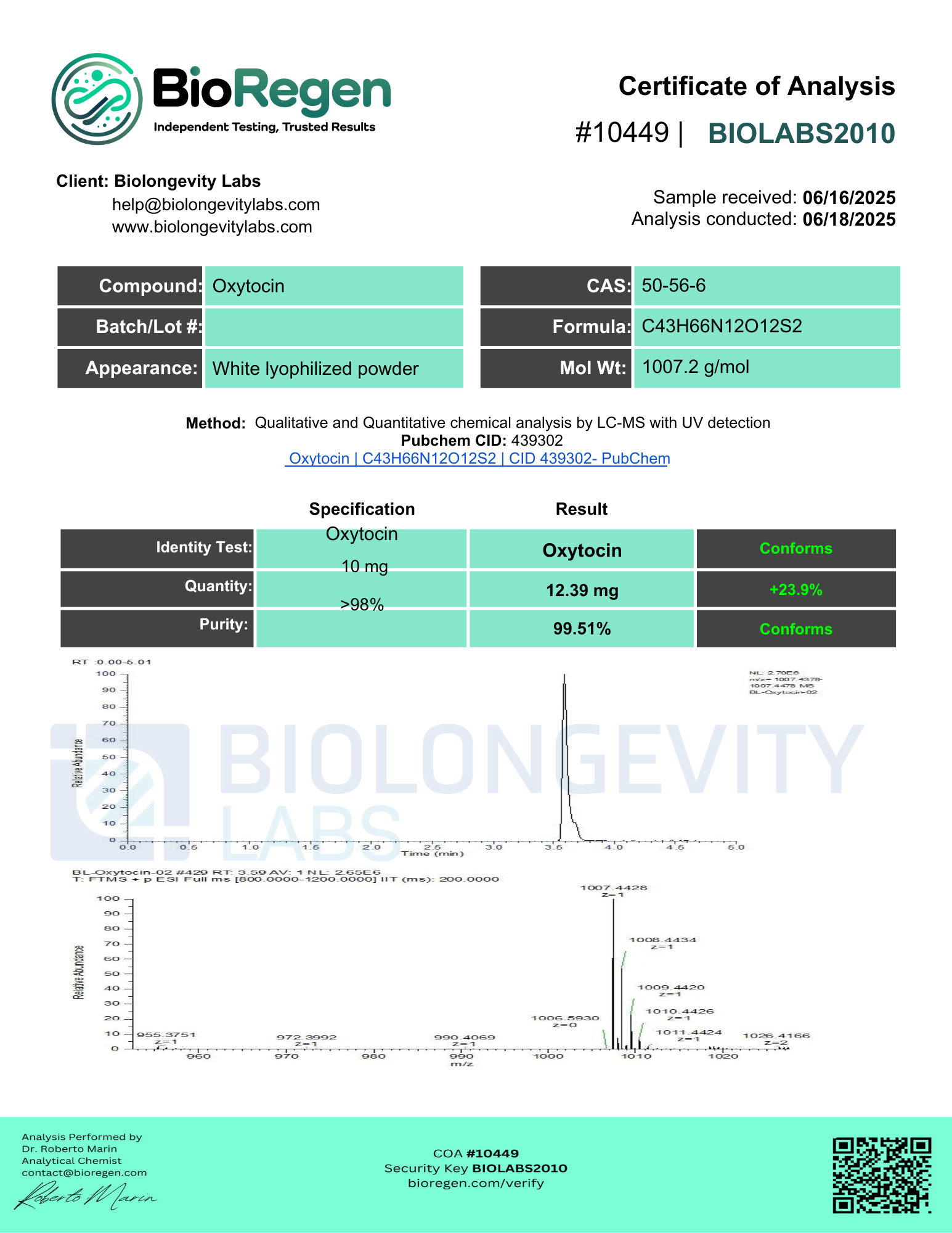
A Certificate of Analysis (COA) is a document that verifies a compound’s identity, purity, and batch quality through independent laboratory testing. Every compound from BioLongevity Labs ships with a COA tied to its specific batch, so researchers can confirm exactly what they received before it enters a protocol.
Each COA reports results from third-party laboratory analysis, including:
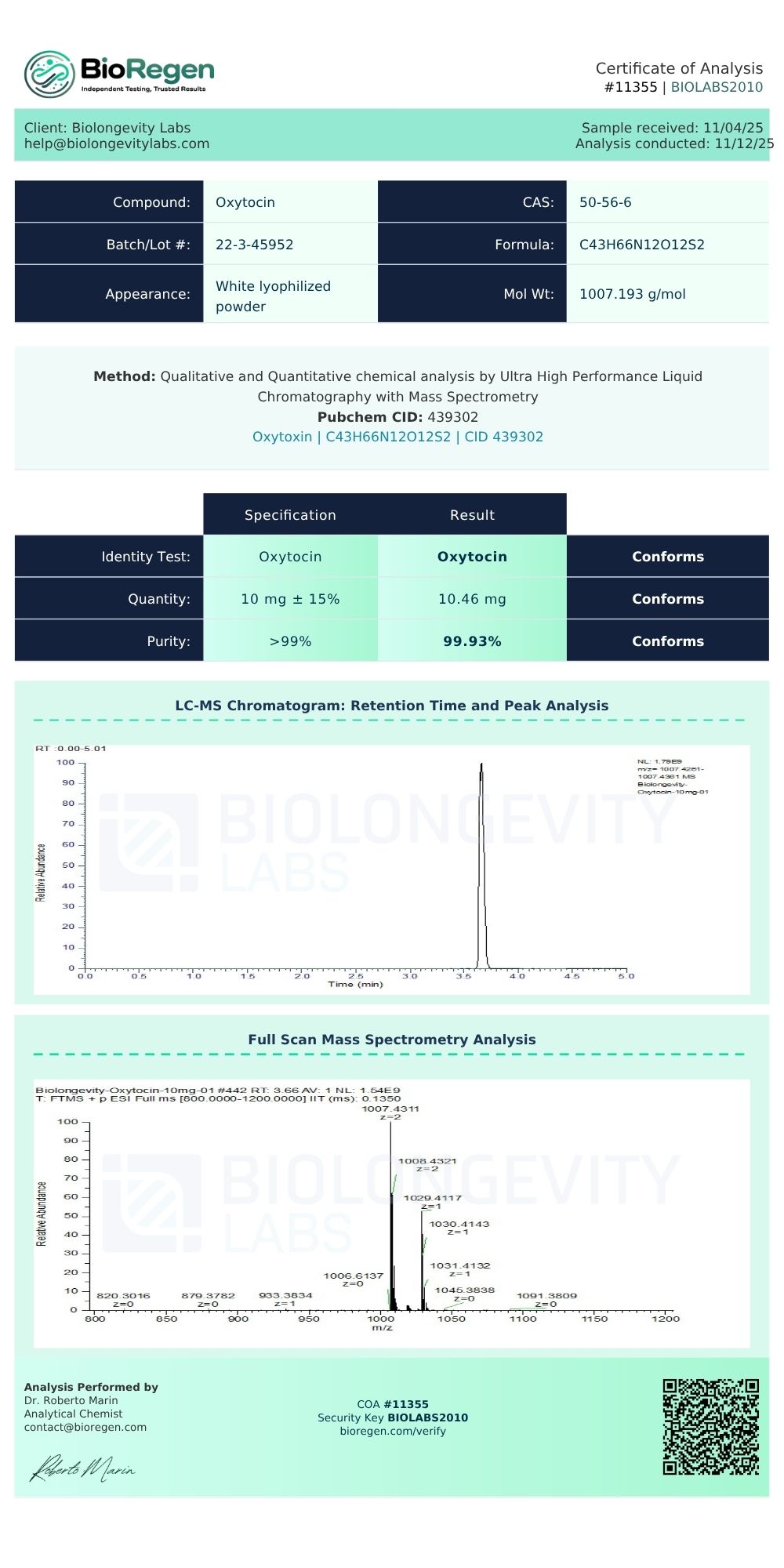
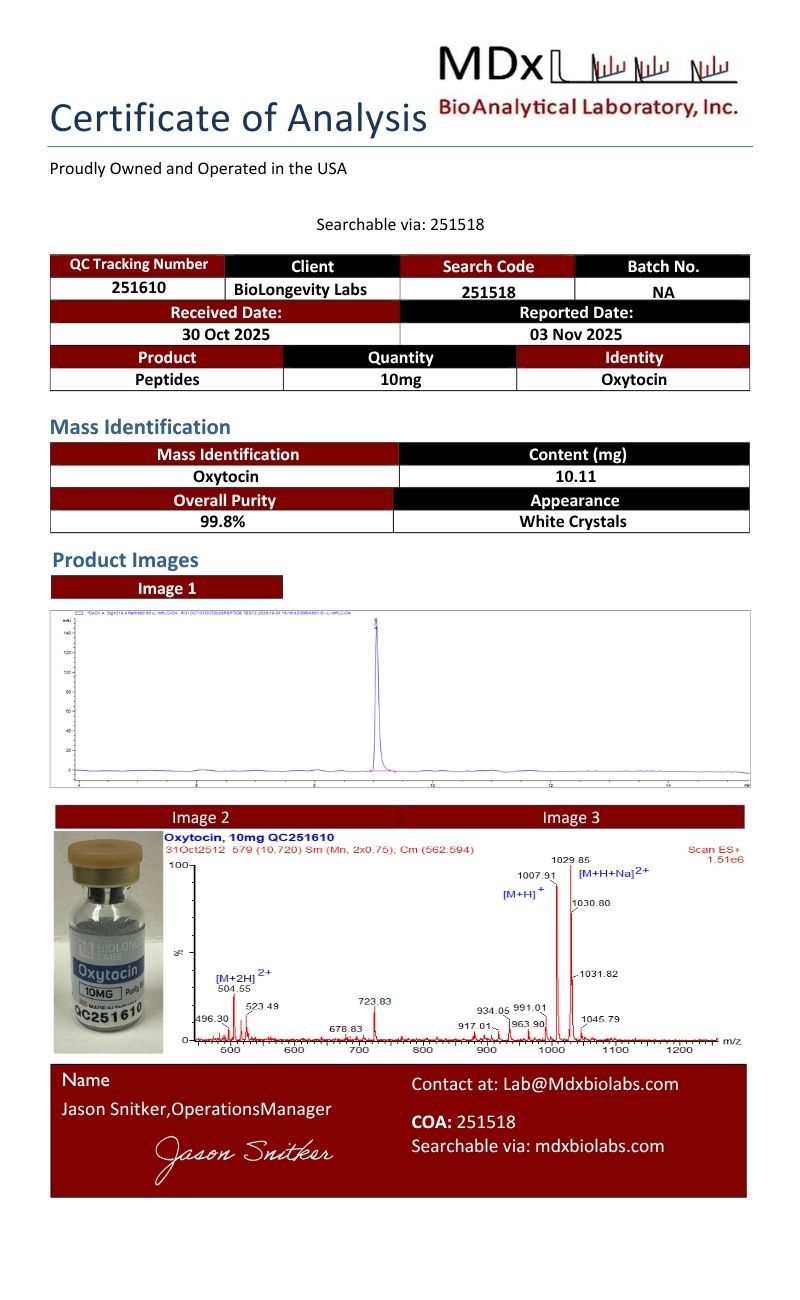
- Ultra-high-performance liquid chromatography with mass spectrometry (UHPLC-MS) for purity, typically confirmed at 99% or higher
- Mass identification for molecular confirmation and content quantitation
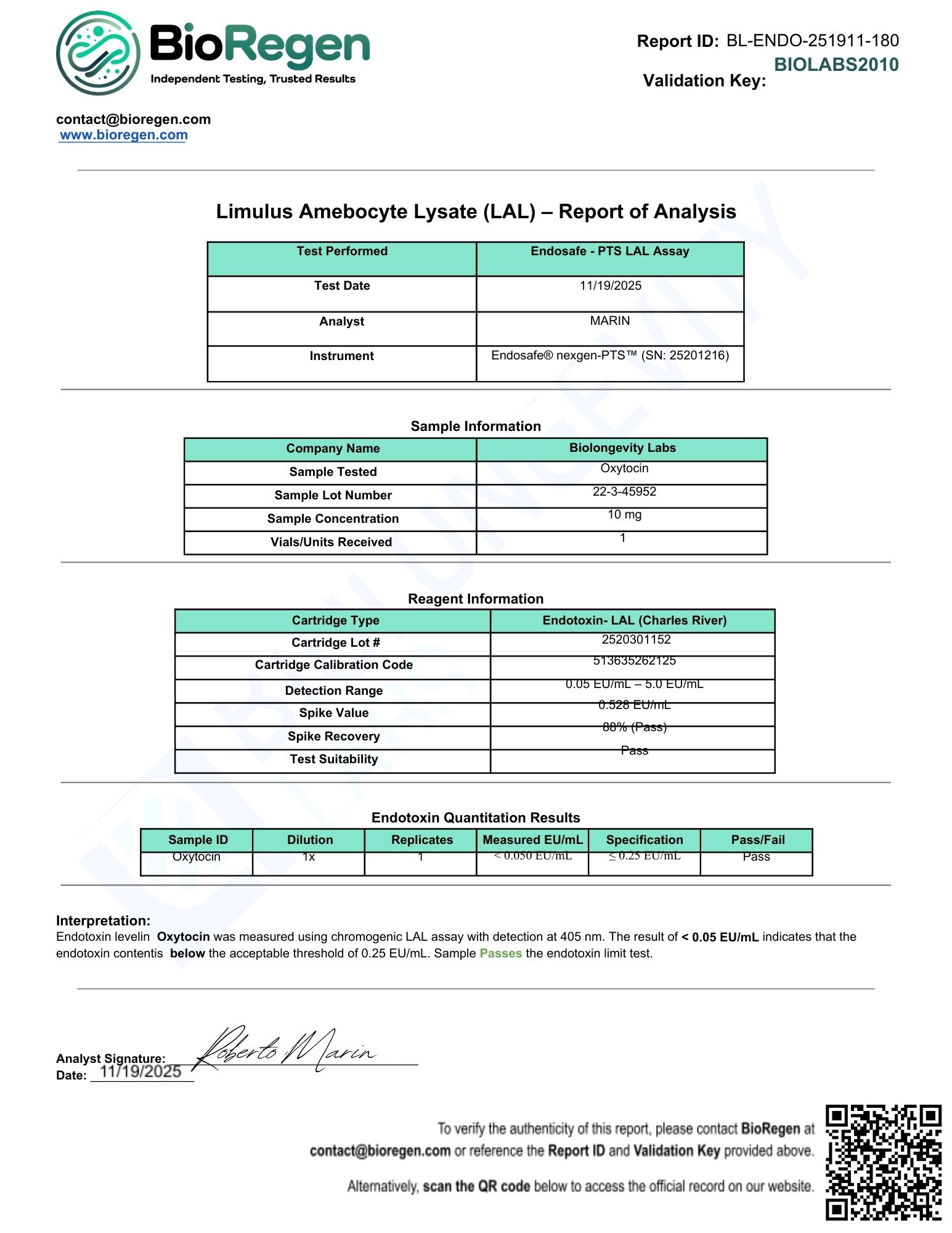
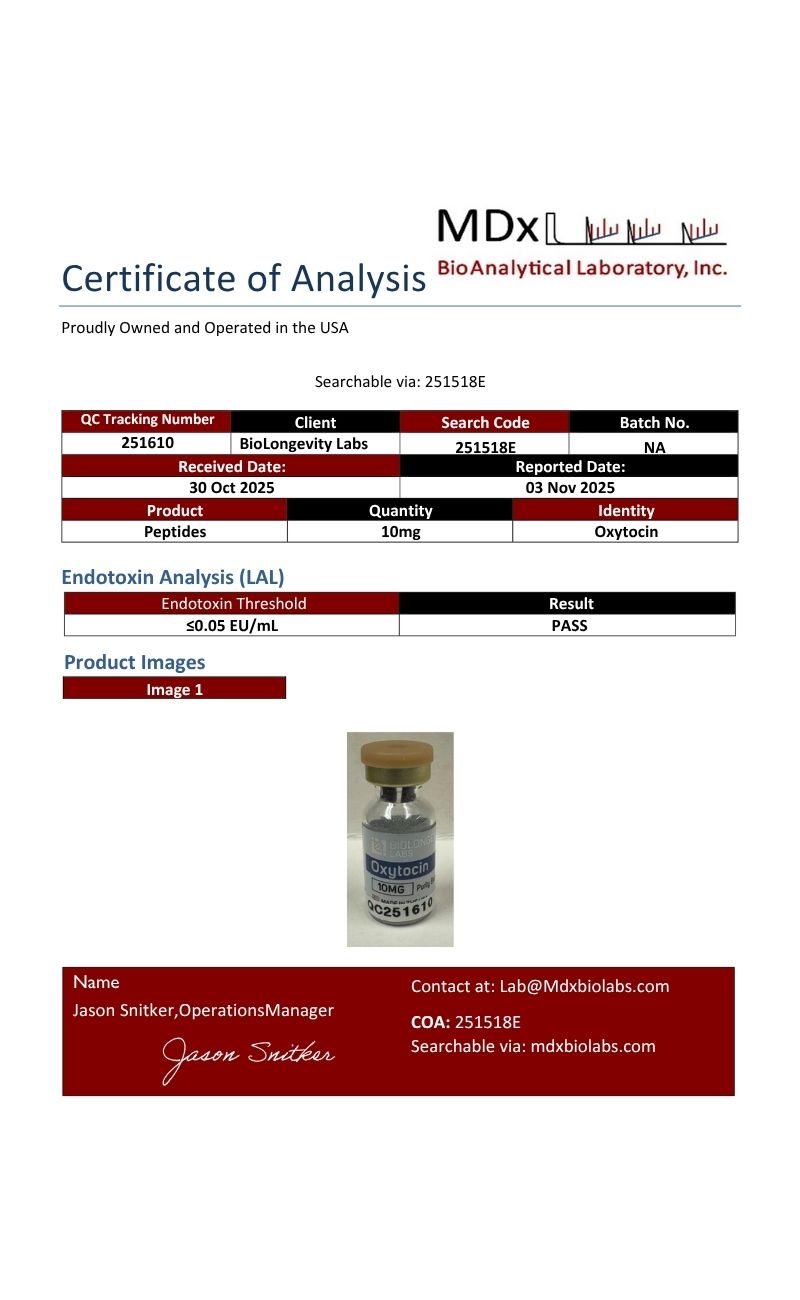
- Endotoxin quantitation by Limulus amebocyte lysate (LAL) assay where applicable
- Visual and physical characterization of the finished material
How to verify a COA independently
Every certificate can be checked against the issuing laboratory’s own records, not just the copy hosted here. Verification does not depend on BioLongevity Labs.
- MDx BioAnalytical Laboratory certificates carry a QC tracking number and a search code. Newer certificates also carry a QR code. Scan the code, or enter the search code at mdxbiolabs.com, to pull the official record.
- BioRegen reports of analysis carry a Report ID and a Validation Key. Scan the QR code on the certificate to open the official record, or reference both identifiers when contacting the laboratory at the address printed on the report.
- SafeCert Labs certificates, which appear on a number of earlier batches, carry a COA number and the signature of the reporting chemist. Reference that number when requesting confirmation from the laboratory directly.
Batches are frequently tested by both laboratories independently. When two certificates exist for the same lot, each one resolves at its own issuing laboratory, which lets a researcher confirm the same material twice through two unrelated sources.
COAs are sourced from independent certified labs rather than in-house testing alone, giving researchers a verifiable record of molecular integrity for each batch. All compounds are supplied for research use only.
Review the COAs for this batch below, or browse the full COA library.
Endotoxin Oxytocin
Oxytocin (11355)
Oxytocin (251518)
Oxytocin (251518E)
Oxytocin(10449)
×
![]()